

What is the best time to hike Inca Trail?
For most travelers, the best time to hike Inca Trail is April, May, September, or October. These months usually offer the best mix of drier weather, greener scenery, and fewer crowds than the busiest stretch of June through August. If your priority is the driest trail and the clearest skies, June through August is still excellent, but nights are colder and permits sell out faster. February is not an option because the Inca Trail closes for annual maintenance.
Table of Contents
Choosing the best time to hike Inca Trail is not only about avoiding rain. The month you choose can change trail conditions, mountain views, permit availability, crowd levels, and even how comfortable you feel at camp each night.
For many travelers, the smartest choice is not always peak season. It is often the shoulder season, when the trail still feels favorable, the scenery looks greener, and the route feels less crowded. That is why April, May, September, and October are usually the most balanced months to go.

The Inca Trail crosses landscapes that make the journey feel bigger with every step
Why does timing matter so much on the Inca Trail?
The Inca Trail is not a simple hike with one steady climate from start to finish. It crosses high mountain passes, cloud forest sections, stone stairways, exposed ridges, and sheltered valleys. One stretch can feel sunny and warm, while another feels damp, windy, or surprisingly cold.
That is exactly why the best time to hike Inca Trail depends on what kind of experience you want. Some hikers care most about dry footing and clear views. Others would rather see greener landscapes and avoid peak season crowds. The right answer depends on your priorities.
Best months to hike the Inca Trail at a glance
| If you want this | Best months | Why |
| Best overall balance | April, May, September, October | Good trail conditions, strong scenery, and fewer crowds than peak season. |
| Driest weather and clearest skies | June, July, August | These are the driest months, but also the busiest and coldest at night. |
| Greener landscapes and fewer people | March, April, November, December | The trail feels more lush and less crowded, but weather is less predictable. |
| Not recommended | February | The Inca Trail closes for annual maintenance and conservation work. |
What is the weather like on the Inca Trail?
The Inca Trail follows the same broad pattern as the Cusco region: a dry season and a rainy season. In general, daytime hiking conditions often feel mild to pleasant, while nights can get cold at higher camps, especially during the dry months.
A useful reference is this: daytime conditions often sit around 18 °C to 20 °C (64 °F to 68 °F), while colder nights at higher elevation can drop close to 0 °C to 5 °C (32 °F to 41 °F). The first part of the route usually feels colder because of altitude. As the trail drops toward the cloud forest, nights tend to feel less harsh.

A month by month weather guide to choose the best season for the Inca Trail
Dry season on the Inca Trail: May to October
For many travelers, this is the safest and easiest answer. The dry season runs roughly from May to October, and this is when you are most likely to get stable weather, drier trails, and clear mountain views.
If this is your first high altitude trek, or if you want easier footing on stone steps and dirt sections, this is usually the best time to hike Inca Trail.
Why the dry season works so well
- Drier trails: less mud and less slippery terrain.
- Better visibility: stronger odds for open views and cleaner photos.
- More predictable conditions: easier for first time trekkers.
- Lower weather stress: you spend less time worrying about constant rain.
Tradeoffs of the dry season
- More people: especially from June to August.
- Colder nights: June and July can feel especially cold at camp.
- More competition for permits: popular months sell out early.
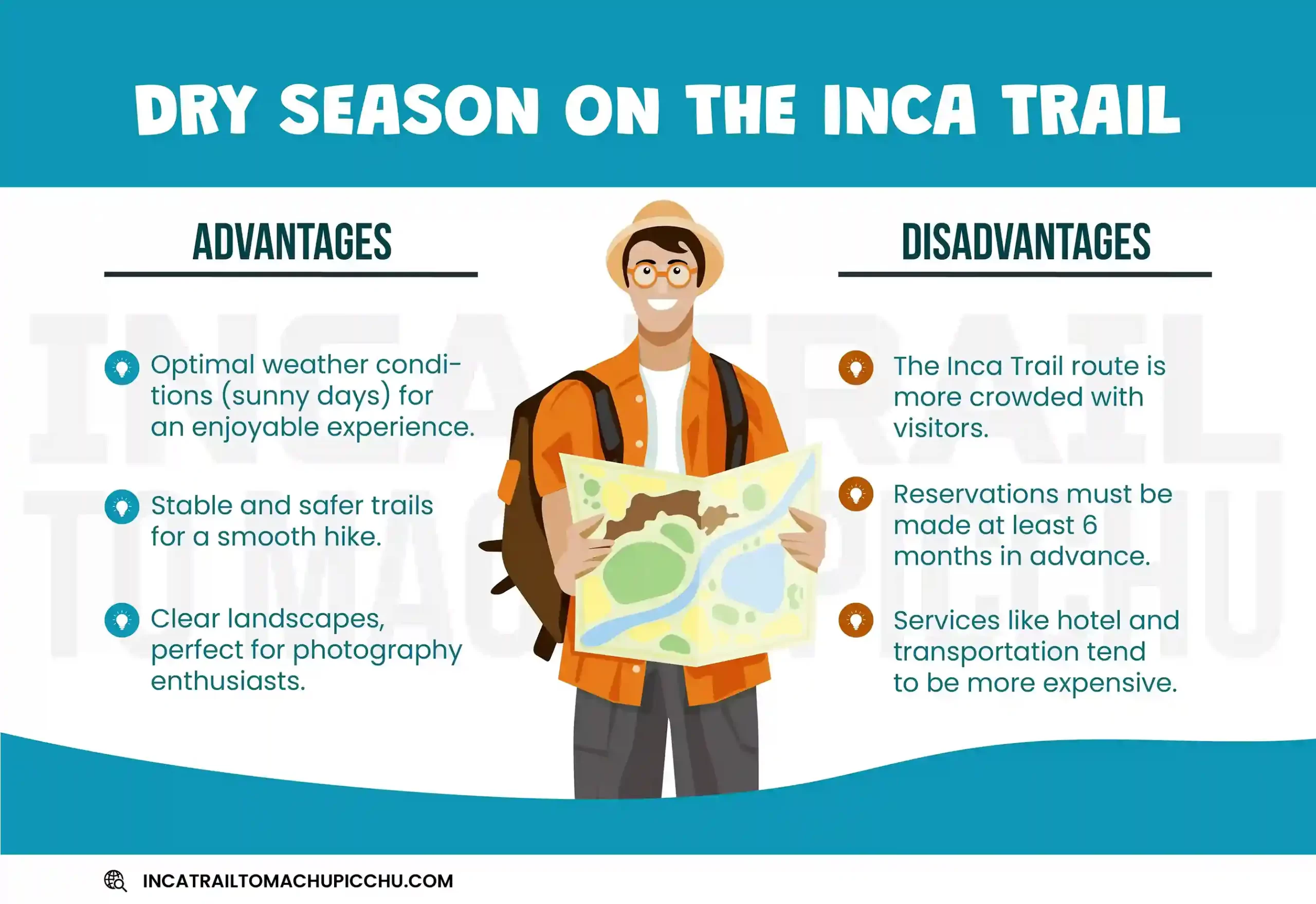
In the dry season, the Inca Trail feels clearer, firmer, and easier to plan
Rainy season on the Inca Trail: November to March
The rainy season gives you a different kind of trek. The route looks greener, the atmosphere feels moodier, and there are fewer people on the trail. For some travelers, that is exactly what makes it special.
Still, this season is less predictable. Rain can make ancient stone steps and dirt sections more slippery, and cloud cover can hide some of the biggest views.
Why some hikers still prefer the rainy season
- Greener scenery: the landscape feels more alive and vibrant.
- Fewer crowds: the trail can feel quieter and more intimate.
- Beautiful atmosphere: mist and cloud forest conditions can be spectacular.
- More flexibility: permit demand is usually not as intense as peak dry season.
Tradeoffs of the rainy season
- Wetter footing: stone sections and descents require more caution.
- Less predictable views: clouds can block mountain panoramas.
- More gear dependence: waterproof layers matter much more.
- February closure: there are no departures that month.
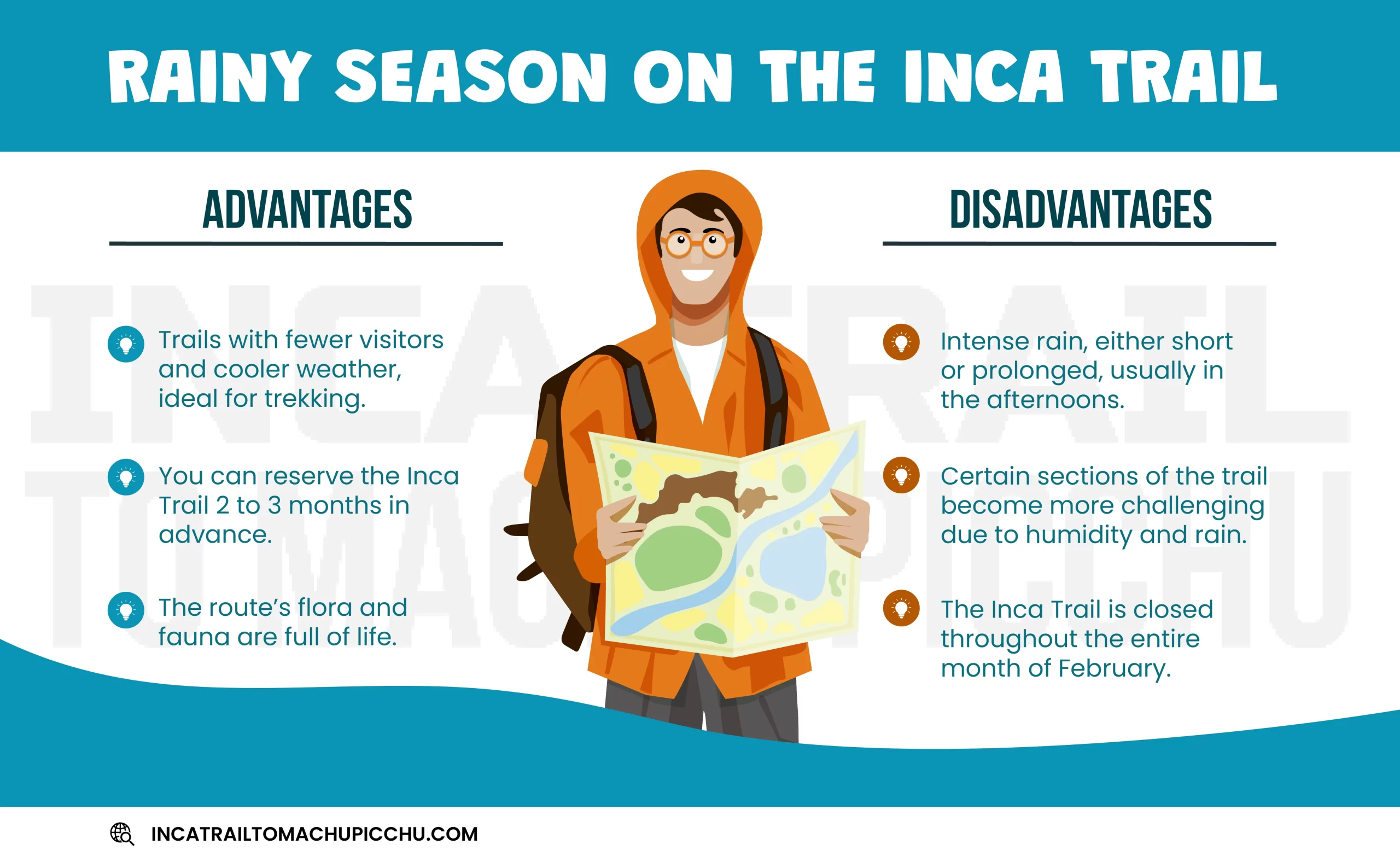
In the rainy season, the Inca Trail turns greener, moodier, and more unpredictable
Month by month: what the Inca Trail feels like through the year
| Month | What to expect | Best for |
| January | Wet, muddy, and variable. Green scenery is strong, but rain is common. | Travelers who care more about atmosphere than ideal footing. |
| February | The Inca Trail is closed for annual maintenance. | Not available for departures. |
| March | Still wet, but conditions begin improving and the trail stays very green. | Flexible hikers who like greener scenery. |
| April | One of the best shoulder season months with fresh scenery and improving weather. | ravelers who want balance, beauty, and fewer crowds. |
| May | A top choice overall with drier trails, strong views, and manageable conditions. | Most first time hikers and travelers looking for the best all around option. |
| June | Very dry and very popular, with colder nights and bigger crowds. | Travelers who want classic dry season conditions. |
| July | Among the driest months, but also one of the coldest at night. | Hikers who prioritize stability and can handle colder camps. |
| August | Still mostly dry, with cold nights and the occasional light shower. | Travelers comfortable with peak season energy. |
| September | A very strong month with good conditions and a slightly calmer feel than peak season. | Travelers who want a smart balance of weather and crowd level. |
| October | Another excellent shoulder season option with fewer people than peak dry season. | Travelers who want good conditions without the busiest trail traffic. |
| November | Rain starts building again, but the trail can still feel quieter and attractive. | Travelers who value fewer crowds more than perfect weather. |
| December | Greener, wetter, and more variable from day to day. | Hikers who do not mind rain and want a less crowded feel. |
When is the Inca Trail most crowded?
The busiest stretch is usually May through September, with the strongest pressure in June, July, and August. Those months are popular because conditions are usually drier and more stable, but that popularity comes with a price: more people and faster permit sellouts.
Booking tip
If you want to hike between May and August, booking 6 to 12 months in advance is the safest move. For shoulder or wetter months, you may have a little more flexibility, but this is still a high demand trek and last minute planning is risky.
How do trail conditions change between seasons?
This is where weather turns into a real hiking decision. In dry months, the trail usually feels firmer and easier to manage. Ancient stone steps, dirt sections, and narrow stretches are still demanding, but they are more straightforward when they are not wet.
In rainy months, those same sections can feel more technical. Mud, slick stone, and wet descents demand more caution and better footwear. That does not make the trail a bad experience. It simply changes the kind of trek you are signing up for.

Wrapped in mist and dense greenery, this stretch shows the most atmospheric side of the Inca Trail
What should you pack based on the season?
No matter when you go, layered clothing is the smartest approach. The Inca Trail can feel warm in the sun, chilly in the shade, and genuinely cold once you stop moving at camp.
In the dry season, lean harder into sun protection and warm evening layers. In the rainy season, keep those same layers but give much more importance to waterproof protection and fast drying fabrics.
- Base layer: moisture wicking trekking shirt.
- Mid layer: fleece or light insulated layer.
- Outer layer: waterproof jacket or rain poncho.
- Bottoms: trekking pants with quick drying fabric.
- Footwear: broken in hiking boots or trail shoes with solid grip.
- Extras: hat, sunglasses, sunscreen, trekking poles, headlamp, and personal medication.
If you want a more detailed gear breakdown, check our full Inca Trail packing list.
What is the best time to hike Inca Trail?
If you want the strongest overall answer, go with April, May, September, or October. Those months usually give you the best mix of trail condition, scenery, weather, and crowd level.
If your only goal is the driest possible trail, June through August is hard to beat, as long as you are ready for colder nights and earlier booking pressure. If you care more about greener landscapes and fewer people, March, November, and December can still work well, but you need to be more flexible with weather.
Once you know your ideal month, the next step is checking permit availability as early as possible. If you are ready to plan, take a look at our Classic Inca Trail tour options and choose the departure window that fits your travel style best.
