

What are the main Inca Trail sites?
The main Inca Trail sites on the Classic route are Patallacta, Runkurakay, Sayacmarca, Phuyupatamarca, Intipata, Wiñay Wayna, and Intipunku, followed by the final arrival at Machu Picchu. These archaeological places are one of the biggest reasons the Classic Inca Trail feels so special, because the trek is not only about reaching Machu Picchu. It is also about walking through a sequence of Inca sites that reveal how the empire planned, built, and moved through the Andes.
Table of Contents
One of the things that really sets the Classic Inca Trail apart is that the history is there the whole way, not just at the end. As you move forward, the Inca Trail archaeological sites give the trek more depth and make the arrival at Machu Picchu feel like the natural climax of a much larger story.
That is why this route feels so different. It is not just a beautiful hike through the Andes, but a living journey where each site adds another layer of history, landscape, and emotion.
If you want the broader route context before focusing on the archaeological side, start with The Ultimate Inca Trail Guide Then use this article as your focused guide to the main Inca Trail sites on the route.
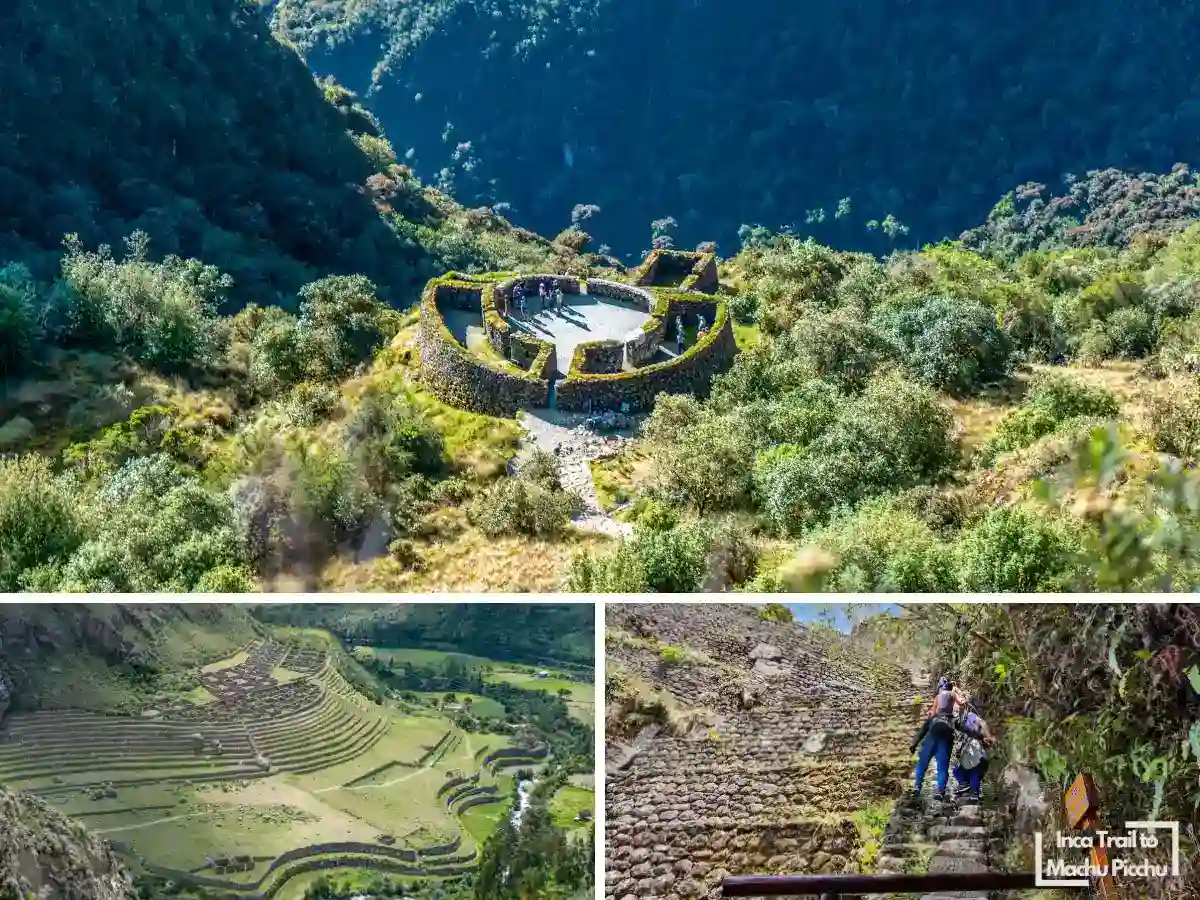
Explore the different archaeological sites found throughout the Inca Trail
Why the Inca Trail sites matter so much
Many travelers think of the Inca Trail as a beautiful route that ends at Machu Picchu. That is true, but it is only part of the story. The Inca Trail sites are what turn the route into a historical and cultural journey. Each site helps explain how the Incas organized movement, agriculture, water, defense, and spiritual life across a difficult mountain environment.
That is also why the Classic Inca Trail 4 Days stands out so strongly. It gives you more archaeological depth before you ever reach Machu Picchu. If history and ruins are a big part of why you want to hike this route, the Classic version is usually the stronger choice over the Short Inca Trail. For that comparison, read 2 Day vs 4 Day Inca Trail and Classic Inca Trail 4 Days.
Inca Trail sites in route order
If you want the clearest possible overview first, this is the archaeological sequence most travelers follow on the Classic route.
| Typical route stage | Site | Why it stands out |
| Day 1 | Patallacta Altitude: 9,022 ft (2,750 m) |
An early major settlement that introduces the agricultural and strategic side of the route |
| Day 2 | Runkurakay Altitude: 12,336 ft (3,760 m) |
A circular site linked to movement, rest, and route control |
| Day 2 to 3 | Sayacmarca Altitude: 11,975 ft (3,650 m) |
An elevated site that reinforces the defensive and strategic side of the trail |
| Day 3 | Phuyupatamarca Altitude: 11,975 ft (3,650 m) |
One of the most atmospheric sites, known for terraces, baths, and cloud forest scenery |
| Day 3 | Intipata Altitude: 8,858 ft (2,700 m) |
A broad terraced area that highlights Inca agricultural engineering |
| Day 3 | Wiñay Wayna Altitude: 8,694 ft (2,650 m) |
The most iconic major site before the final approach to Machu Picchu |
| Day 4 | Intipunku Altitude: 8,923 ft (2,720 m) |
The Sun Gate and the traditional first full view of Machu Picchu |
| Day 4 | Machu Picchu Altitude: 7,972 ft (2,430 m) |
The final archaeological reward that gives the whole route its meaning |
Which route gives you the best access to the Inca Trail sites?
If archaeology is one of your top priorities, the Classic Inca Trail 4 Days is usually the best choice. It gives you far more archaeological depth before Machu Picchu than the Short Inca Trail, which works better for travelers with less time or for those who want a lighter route.
The 5 day route can also be a good option for travelers who want a slower pace, but the 4 day Classic route is still the version most people mean when they talk about experiencing the main Inca Trail sites in the most complete way. For that comparison, read Inca Trail 5 Days.
Patallacta: one of the first major Inca Trail sites
Patallacta is one of the first major archaeological sites travelers encounter on the Classic Inca Trail. It stands out for its extensive terraces, multiple structures, and clear role within the wider road system. More than just a scenic ruin, it shows how the Incas used mountain terrain for settlement, food production, and route organization.
This site is especially important because it introduces the agricultural and logistical side of the trail very early. It helps hikers understand that the route was not just ceremonial or scenic. It was also practical, productive, and deeply integrated with daily life.
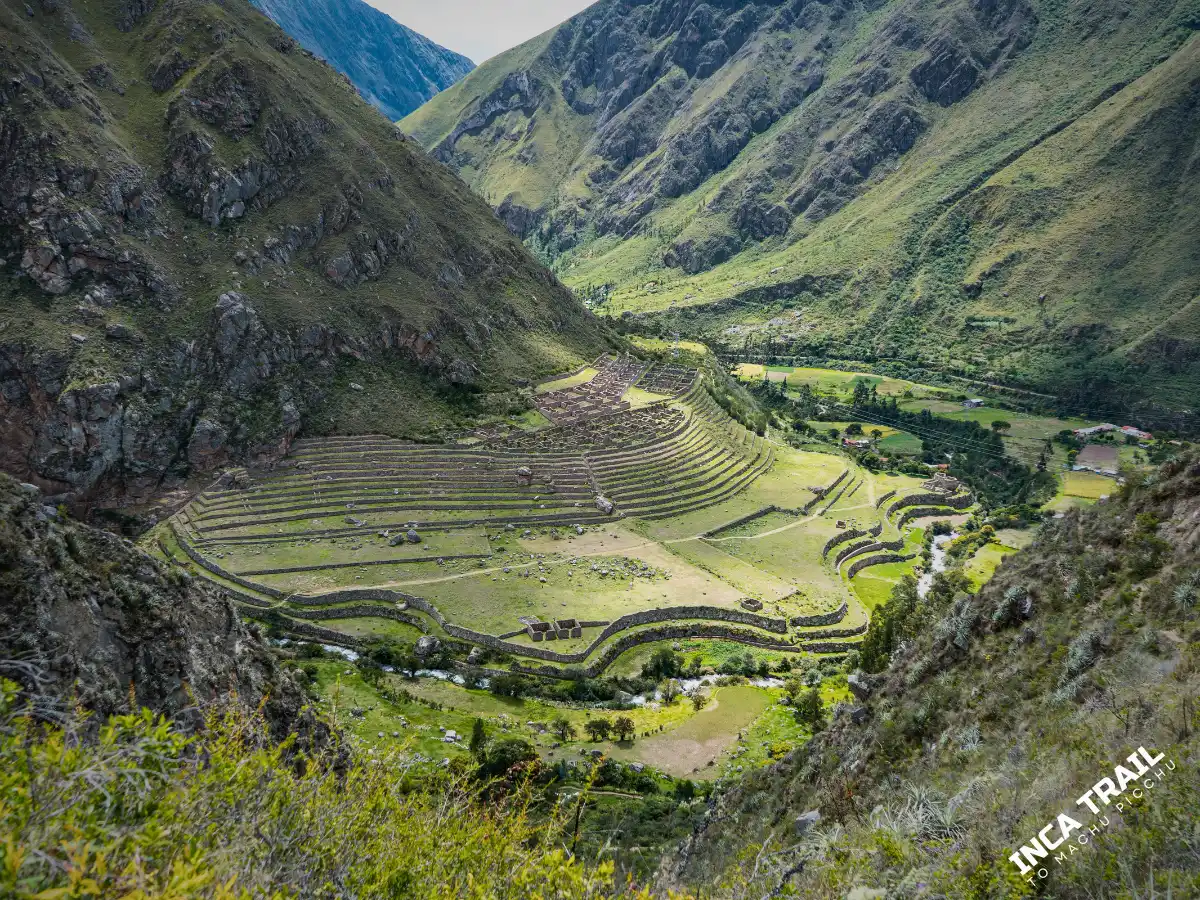
Patallacta opens the journey with terraces, stonework, and the first real sense of the Inca Trail’s scale.
Runkurakay: a circular site linked to movement and control
Runkurakay is one of the most distinctive Inca Trail sites because of its circular form, which is unusual in Inca architecture. It is often described as a tambo, or resting place, and is also associated with movement, route control, and support for travelers or messengers passing through the trail system.
Its position on the route makes it feel more strategic than decorative. Runkurakay reinforces the idea that the Inca Trail was carefully built for communication and surveillance as well as travel.

Runkurakay feels small at first glance, but its circular design reveals just how strategic this stop once was.
Sayacmarca: the inaccessible town
Sayacmarca is one of the most visually striking Inca Trail sites because of its elevated position and the steep approach that leads to it. The site includes residences, storage areas, and water channels, all of which suggest careful planning and strong control over its mountain setting.
This is one of the places where the trail starts to feel especially dramatic. Sayacmarca is not only historically important. It also shows how the Incas selected locations that were protected, strategic, and deeply connected to the surrounding landscape.

Sayacmarca rises above the trail like a lookout, where history and mountain views meet in one stop.
Phuyupatamarca: archaeology in the clouds
Phuyupatamarca, often translated as the “Town in the Clouds,” is one of the most atmospheric and memorable sites on the route. It is known for its terraces, ceremonial baths, water channels, and mountain setting, which often feels wrapped in mist.
For many hikers, Phuyupatamarca is one of the places that most strongly blends archaeology and landscape. It feels ceremonial, elevated, and visually unforgettable, which is why it remains one of the highlights of the Classic route.

Phuyupatamarca lives up to its name, with stone paths and terraces that seem suspended above the clouds.
Intipata: terraces built for the mountains
Intipata stands out for its broad agricultural terraces and the way they adapt to the mountain slope. It is one of the clearest examples of how the Incas shaped difficult terrain into highly functional agricultural space.
Even if it is not always the site travelers remember first by name, it adds something important to the route. Intipata helps show that the Inca Trail was not only about checkpoints or sacred places. It was also about farming, sustainability, and smart mountain engineering.

Intipata shows the Inca genius for farming, but it is the sweeping valley views that make you pause.
Wiñay Wayna: the most iconic site before Machu Picchu
Wiñay Wayna, often translated as “Forever Young,” is one of the best known and most beloved Inca Trail sites. It combines terraces, architectural remains, and an incredible setting near the final stretch of the route. Because of its location, it also feels like one of the last great archaeological rewards before the final arrival.
For many hikers, Wiñay Wayna is the site that most clearly signals that Machu Picchu is close. It is not only beautiful on its own. It also carries the emotional weight of the final stage of the trail.

Wiñay Wayna rises through terraces and stonework as one of the great highlights of the Inca Trail
Intipunku: the Sun Gate and the traditional arrival
Intipunku, the Sun Gate, is one of the most emotional points on the Classic Inca Trail. For hikers arriving on foot, it is the traditional gateway to the first full view of Machu Picchu. That alone makes it one of the most meaningful sites on the route.
After days of walking, Intipunku is the place where the archaeological journey and the final destination come together most powerfully. That is why it remains one of the most unforgettable points of the Classic route.

Intipunku is the moment the trail finally delivers its most anticipated reveal.
Machu Picchu as the final archaeological reward
Machu Picchu is the final archaeological reward of the route. What makes it feel different on the Inca Trail is that you do not arrive at the citadel as a separate tourist stop. You arrive after moving through a chain of sites that gradually builds the historical and emotional weight of the journey.
That is one of the biggest reasons the Classic route feels so different from visiting Machu Picchu by train. The sites before it give the final arrival much more depth.

A traveler photographing Machu Picchu Mountain shows why this viewpoint is so valued for wide, elevated scenery.
How to enjoy the archaeological side of the Inca Trail better
You do not need to be an expert in Inca history to appreciate the route more deeply. A few simple choices can make the archaeological side of the trek much more meaningful.
- Do not rush every stop: some of the most interesting places reveal more when you slow down and look carefully
- Listen to your guide: many of the historical and symbolic meanings of the sites are easy to miss without context
- Think in sequence, not isolation: the route makes more sense when you see the sites as part of one connected journey
- Choose the Classic route if archaeology matters most: it gives you more depth than shorter versions
Explore the Inca Trail Through Its Archaeological Sites
The Inca Trail sites are one of the main reasons the Classic route feels so much richer than a simple hike to Machu Picchu. Each place adds another layer to the journey, from agricultural terraces and mountain checkpoints to ceremonial spaces and the final arrival through the Sun Gate. When you understand the sites, the trek stops feeling like just a route and starts feeling like a much deeper historical experience.
If you are ready to turn that interest into the real journey, this is a good time to choose an operator you can trust from start to finish. Good agencies do more than organize permits and logistics. They also help travelers understand the archaeological side of the trail, pace the route well, and make the experience feel more meaningful along the way. You can explore Inkayni Peru Tours or Waman Adventures and choose the option that best fits your pace, comfort level, and travel style.
Ready to experience the archaeological side of the Inca Trail with more depth?
If this guide helped you understand the main Inca Trail sites, these are good next steps for comparing routes and preparing better:
- Inkayni Peru Tours Short 2 Day and Classic 4 Day
- Waman Adventures Short 2 Day and Classic 4 Day
