


Which is better, the 2 Day Inca Trail or the 4 Day Inca Trail?
The 2 Day Inca Trail is better for travelers who want a shorter, easier route with a hotel night and less advance planning, while the 4 Day Inca Trail is better for those who want the full experience with more archaeological sites, more mountain scenery, more physical challenge, and three nights on the trail. If your priority is comfort and limited time, the 2 day route is usually the smarter choice. If your priority is immersion and the classic bucket list trek to Machu Picchu, the 4 day route is usually the better one.
Table of Contents
Choosing between the 2 Day Inca Trail vs 4 Day Inca Trail is one of the most important decisions travelers make before booking Machu Picchu. Both routes let you enter the sanctuary on foot, both connect you with Inca history, and both can be memorable. But they do not feel the same once you look at the distance, altitude, difficulty, logistics, and overall rhythm of the experience.
This guide is designed to help you choose the right option based on what actually matters: how much time you have, how hard you want to push physically, how important camping is to you, how early you need to book, and what kind of arrival at Machu Picchu you want. If you still need the bigger picture of the route itself, pair this article with The Ultimate Guide to the Inca Trail.

The first day of the Short Inca Trail blends history, scenery, and the first steps toward Machu Picchu
2 Day Inca Trail vs 4 Day: quick comparison
| Feature | 2 Day Inca Trail | 4 Day Inca Trail |
| Distance | About 7.5 miles / 12 km | About 26.7 miles / 43 km |
| Start point | Km 104, Chachabamba | Km 82, Piscacucho |
| Highest altitude | About 8,956 ft / 2,730 m ft at Intipunku | 13,828 ft / 4,215 m at Warmiwañusca |
| Difficulty | Easy to moderate | Moderate to challenging |
| Daily hiking time | Main hike on Day 1, roughly 6 to 8 hours | Roughly 5 to 8 hours per day |
| Overnight style | Hotel in Aguas Calientes | Camping on the trail |
| Archaeological depth | Fewer sites, but strong highlights | Full classic route with many sites |
| Permit pressure | Usually easier to secure | Much more competitive |
| Best for | Travelers short on time or wanting a lighter route | Travelers wanting the full Inca Trail experience |
What is the 2 Day Inca Trail?
The 2 Day Inca Trail, also called the Short Inca Trail, is a shorter version of the classic route designed for travelers who want the feel of the Inca Trail without committing to four days of trekking and camping. You start at Km 104, hike through cloud forest, pass Wiñay Wayna, and enter Machu Picchu through the Sun Gate. Then you sleep in Aguas Calientes and return to the citadel the next day for a guided visit.
This route works especially well for travelers with limited time, mixed fitness levels, or a preference for more comfort at night. If you want the route-specific guide, read The Short Inca Trail to Machu Picchu.
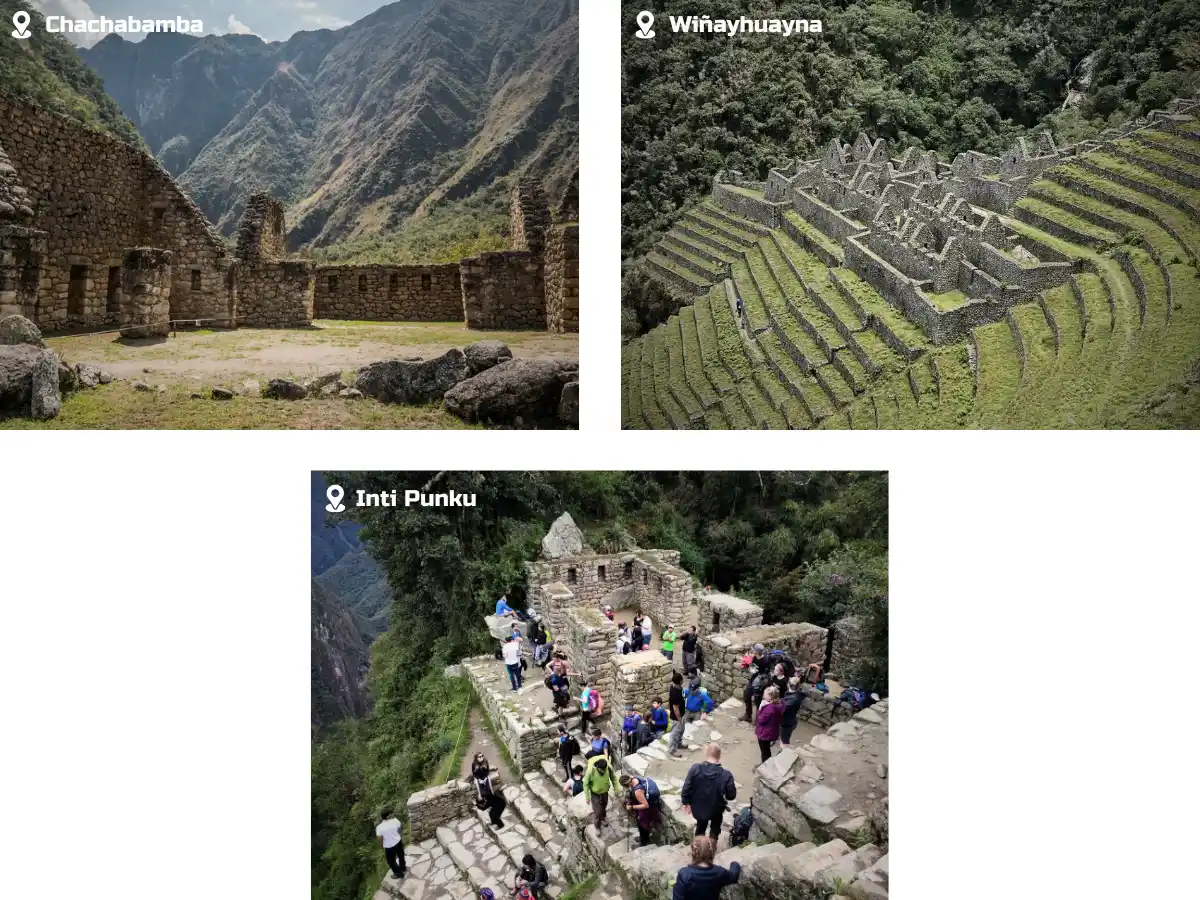
For travelers short on time, the 2 day Inca Trail still gathers some of the route’s most memorable highlights
Main highlights of the 2 Day route
- Chachabamba at the trail entrance
- Wiñay Wayna, one of the most impressive archaeological sites on the route
- Intipunku, the Sun Gate entrance above Machu Picchu
- Machu Picchu with a guided visit on Day 2
What is the 4 Day Inca Trail?
The 4 Day Inca Trail is the full classic trek and the version most travelers mean when they say “Inca Trail.” It starts at Km 82 and follows original Inca paths through valleys, passes, cloud forest, campsites, and multiple archaeological sites before arriving at Machu Picchu through Intipunku.
This is the better choice for travelers who want the full sense of progression, challenge, and immersion. You do not just arrive at Machu Picchu. You earn it over several days of changing terrain and altitude. If you want the wider route guide, see the classic 4 Day Inca Trail
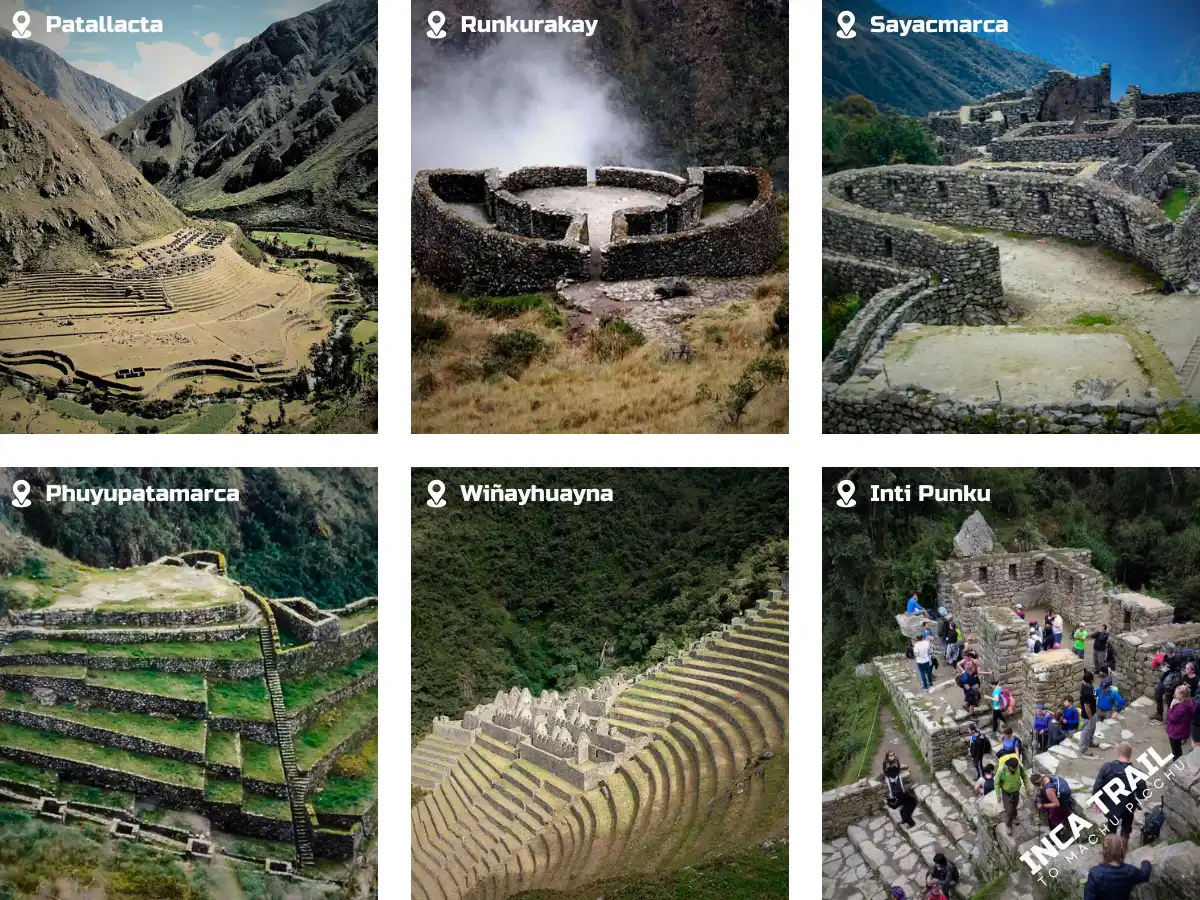
The 4 day Inca Trail brings together the classic landscapes and archaeological stops that define the route
Main highlights of the 4 Day route
- Patallacta
- Warmiwañusca, also called Dead Woman’s Pass
- Runkurakay
- Sayacmarca
- Phuyupatamarca
- Wiñay Wayna
- Intipunku and Machu Picchu
Which route is harder?
The answer is simple: the 4 Day Inca Trail is much harder. It is longer, climbs much higher, includes multiple days of effort, and involves camping at altitude. The 2 Day Inca Trail is easier overall, but it is still a real hike and not just a scenic walk. Its shorter format concentrates most of the effort into one main hiking day.
| Route | Difficulty | What makes it feel that way |
| 2 Day Inca Trail | Easy to moderate | Shorter distance, lower altitude, and only one main trekking day, but still includes steady climbing and a long hiking block |
| 4 Day Inca Trail | Moderate to challenging | Longer distance, much higher altitude, multi day effort, and the climb to Dead Woman’s Pass |
For a full difficulty breakdown, read Inca Trail Difficulty. For altitude planning, see Inca Trail Altitude.

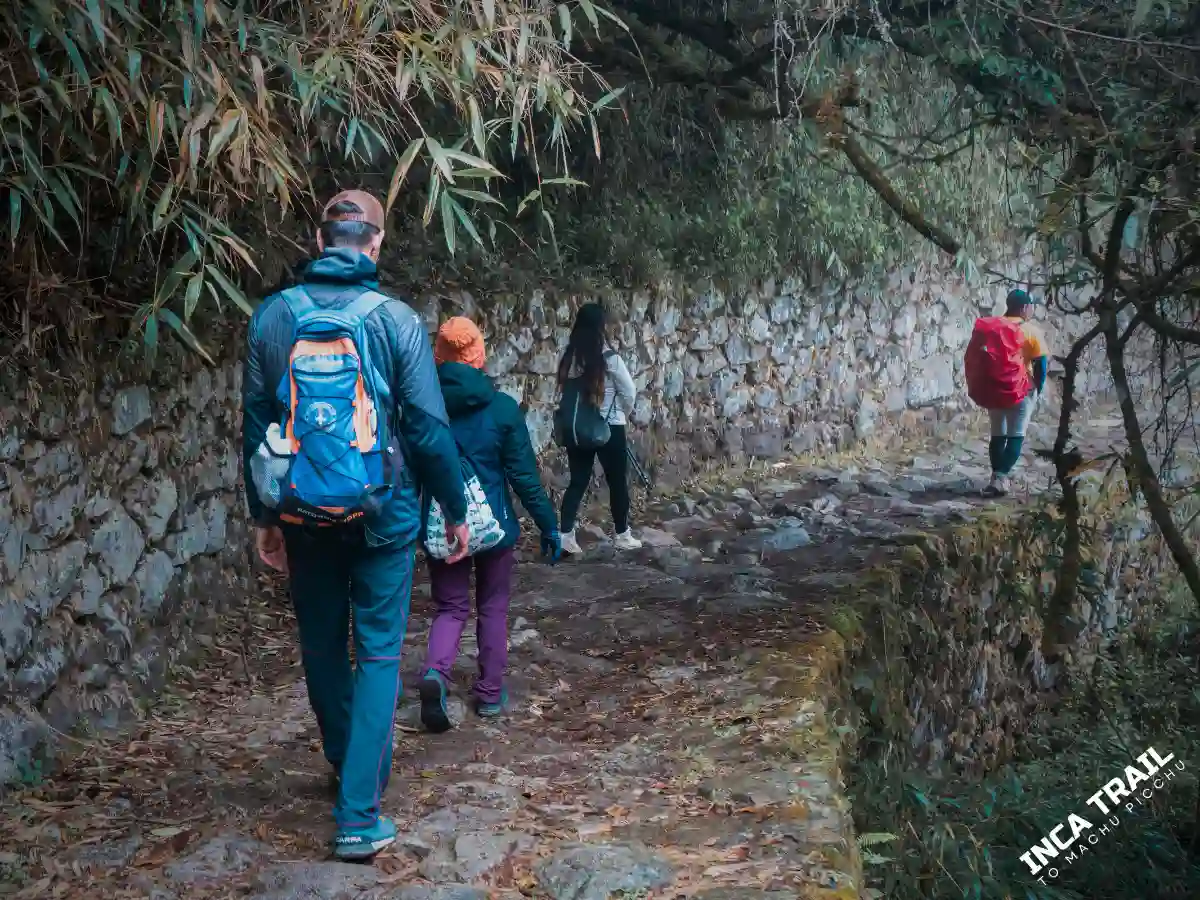
Stone steps, riverside paths, and open valleys reveal the changing terrain of the Inca Trail
Key tip: Spend at least one to two full days acclimatizing in Cusco before either trek. Altitude matters even on the shorter version.
Altitude and route profile
Altitude is one of the biggest differences between these two options. The Short Inca Trail stays in a much more manageable altitude band, while the Classic route climbs to 4,215 m / 13,828 ft at Warmiwañusca.
| Detail | Classic Inca Trail | Short Inca Trail |
| Start point | Km 82, Piscacucho | Km 104, Chachabamba |
| Highest point | 13,828 ft / 4,215 m | About 8,956 ft / 2,730 m |
| Lowest point | About 6,725 ft / 2,050 m ft at Aguas Calientes | About 6,725 f / 2,050 mft at Aguas Calientes |
| Altitude feel | Much more demanding | More manageable for most travelers |

A simple comparison of the distance covered on the Classic and Short Inca Trail routes
Permits, availability, and booking pressure
Both routes require official permits through an authorized operator, and permits are non-transferable once issued. In practical terms, the 4 Day Inca Trail is much more competitive. The 2 Day route is usually easier to secure.
If availability is a big factor in your decision, read Inca Trail Availability and Permits
| Booking factor | 2 Day Inca Trail | 4 Day Inca Trail |
| Permit pressure | Usually lower | Usually much higher |
| Typical lead time | Often weeks, depending on season | Often months, especially in dry season |
| Best booking habit | Still book early | Book as early as possible |
The trail closes every February for maintenance and restoration. For seasonal planning, also read Best Time to Hike the Inca Trail.
Securing your permit early is one of the most important steps before hiking the Inca Trail
What does each trek cost?
The 2 Day Inca Trail is usually cheaper because it involves less trail time, no campsite logistics, and a simpler structure. The 4 Day Inca Trail costs more because it includes more staff, camping equipment, porter logistics, and a longer guided experience.
| Trek | Group | Private | Compare |
| 2 Day Short Inca Trail | From $539 USD | From $649 USD | Inkayni |
| 2 Day Short Inca Trail | From $519 USD | From $629 USD | Waman |
| 4 Day Classic Inca Trail | From $805 USD | From $950 USD | Inkayni |
| 4 Day Classic Inca Trail | From $829 USD | From $980 USD | Waman |
For deeper pricing context, read Inca Trail Price.
Where do you sleep?
This is one of the clearest emotional differences between the two routes.
On the 4 Day Inca Trail, you sleep at trail campsites such as Wayllabamba, Pacaymayo, and Wiñay Wayna. This is part of what gives the route its expedition feel. On the 2 Day Inca Trail, there is no camping. You finish the hike, return to Aguas Calientes, and sleep in a hotel before visiting Machu Picchu the next day.
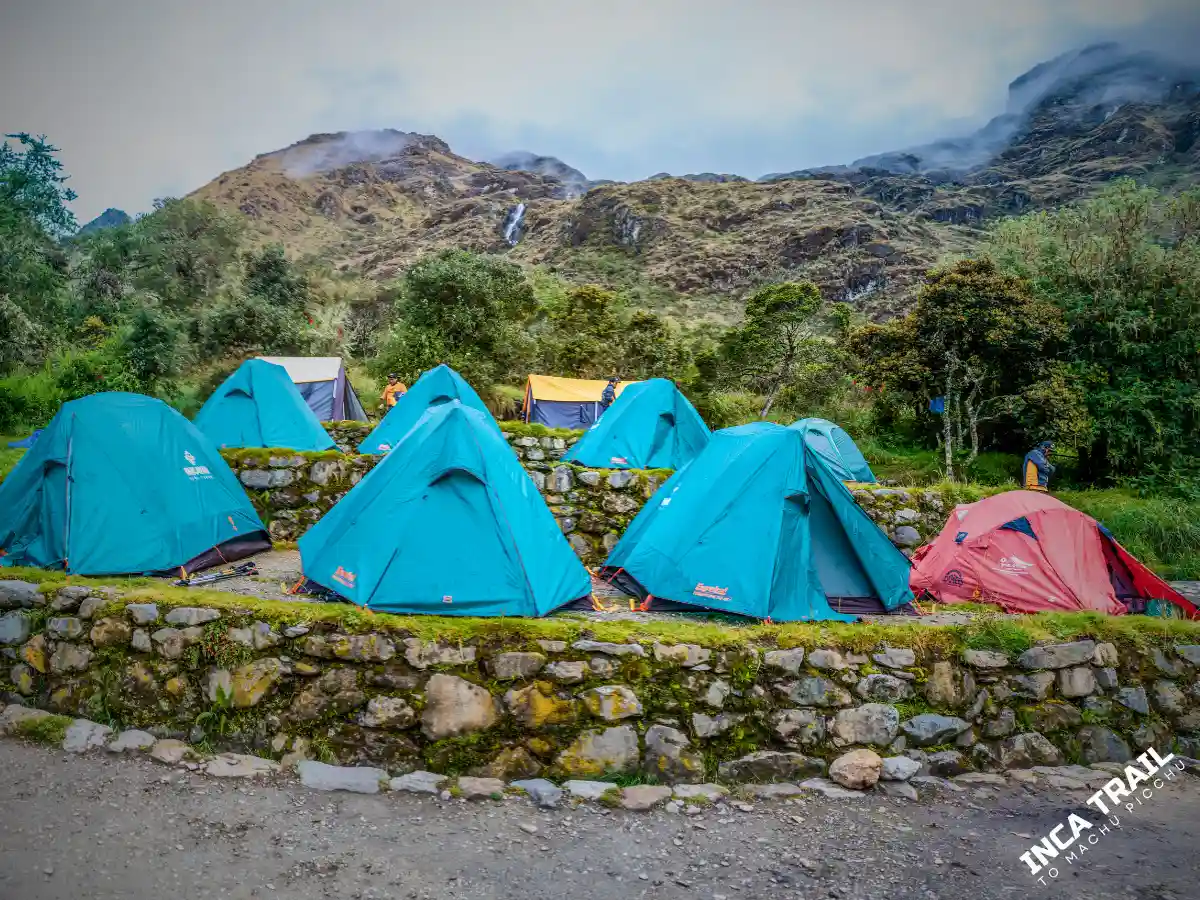
Camping on the Inca Trail adds one of the most memorable parts of the journey
What to pack for each route
Both versions share the same basics: waterproof outerwear, good hiking shoes or boots, sun protection, rain protection, insect repellent, water, and your passport. But the 4 Day route needs extra layering and more overnight gear, while the 2 Day route can be done much more lightly.
For the full packing breakdown, read Inca Trail Packing List.

Everything worth packing to start the Inca Trail better prepared
Meals, guides, porters, and trail rules
Both routes require a certified guide. That is a legal requirement, but it is also a major part of the value of the trek. On the 4 Day route, porters and campsite logistics are part of the structure. On the 2 Day route, there are no porters because you hike with a daypack and return to town.
Meal service is also very different. The 4 day version usually feels like a full trekking operation with hot meals and camp service, while the 2 day version is simpler and more compact.

The porters’ work is one of the great human efforts behind the Inca Trail experience
Pros and cons of each route
2 Day Inca Trail
| Pros | Cons |
| Easier to fit into a shorter Peru itinerary | Covers much less of the original route |
| Usually easier to book | You miss much of the archaeological and camping experience |
| Less physically demanding overall | The route still concentrates effort into one main day |
| Hotel night instead of camping | Feels less immersive than the classic route |
4 Day Inca Trail
| Pros | Cons |
| The full classic Inca Trail experience | Much harder to book and more expensive |
| More ruins, more trail time, more immersion | Higher altitude and more physical demand |
| Three nights camping in the Andes | Requires more time and more preparation |
| Stronger sense of progression and accomplishment | Less comfortable for travelers who dislike camping |

The Classic Inca Trail offers a deeper sense of adventure with longer days, bigger landscapes, and a more demanding route
Which route is right for you?
The right choice comes down to the kind of Inca Trail experience you actually want. Both are worthwhile, but they serve very different travel styles.
Choose the 2 Day Inca Trail if you have limited time, want a lighter trekking experience, prefer sleeping in a hotel, or are booking closer to your travel dates.
Choose the 4 Day Inca Trail if you want the full classic route, more archaeological depth, more time on the trail, and the stronger sense of having completed one of the world’s great treks.
If you already know which adventure fits your travel style best, the next step is choosing an agency you can trust to guide the process well from the first booking details to your arrival at Machu Picchu. Working with experienced operators such as Inkayni Peru Tours or Waman Adventures gives you the confidence. Pick the agency that feels like the best fit for your trip, compare the option you prefer, and start planning the journey.
Ready to compare 2 day Inca Trail vs 4 day Inca Trail with more confidence?
If this guide helped you understand what the Inca Trail 2 Days vs 4 Days is really like, these are good next steps for comparing routes and services before you book:
- Inkayni Peru Tours: Short Inca Trail 2 Days and Classic Inca Trail 4 Days
- Waman Adventures: Short Inca Trail 2 Days and Classic Inca Trail 4 Days

