


What is the Inca Trail 4 Days, and why is it the classic route to Machu Picchu?
The Inca Trail 4 Days is considered the classic route because it gives travelers the full traditional Inca Trail experience, including the original path from Km 82, multiple archaeological sites, high mountain passes, trail camping, and the iconic arrival at Machu Picchu through the Sun Gate. It covers about 26.7 miles (43 km) over 4 days and 3 nights and reaches 13,828 ft (4,215 m) at Dead Woman’s Pass, making it the most complete and best known version of the trek.
Table of Contents
The Inca Trail 4 Days is the full classic route to Machu Picchu and the version most travelers picture when they think about hiking the Inca Trail. It includes several days on the trail, high mountain passes, archaeological sites, changing landscapes, and the final arrival through the Sun Gate.
What makes the Inca Trail 4 Days so special is that it gives you the complete route, not just a shorter section of it. The trek includes altitude, distance, trail camping, and repeated hiking days, which make it more demanding but also much more rewarding for travelers who want the full experience.
If you want the full big picture of how the Inca Trail system works before focusing on this route, start with The Ultimate Inca Trail Guide. Then use this article as your focused guide to the Inca Trail 4 Days itself.

The 4 day route is the version that gives travelers the full classic Inca Trail experience from start to finish
Inca Trail 4 Days at a glance
| Key point | Main detail |
| Duration | 4 days and 3 nights |
| Distance | About 26.7 miles (43 km) |
| Starting point | Piscacucho, better known as Km 82 |
| Highest point | Dead Woman’s Pass at 13,828 ft (4,215 m) |
| Difficulty | Moderate to challenging |
| Overnight style | Camping on the trail at designated campsites |
| Best for | Travelers who want the full classic route and are ready for a real trekking experience |
What is the Inca Trail 4 Days, and who is it best for?
The Inca Trail 4 Days is the classic trekking route to Machu Picchu. It starts at Km 82, follows the original Inca path through valleys, high passes, cloud forest, and archaeological sites, and ends with the iconic entrance through Intipunku, the Sun Gate.
This version is best for travelers who want the strongest historical and trekking experience on the route. It works especially well for people who value the full journey, want to camp on the trail, and are prepared for a more demanding but more immersive route than the Short Inca Trail.
If your main doubt is whether the 4 day route or the 2 day route fits you better, read 2 Day vs 4 Day Inca Trail. If you are curious about the slower paced option, read Inca Trail 5 Days.
Inca Trail 4 Days itinerary summary
A typical Inca Trail 4 Days itinerary follows the structure below, although camps can vary slightly depending on operator logistics and park assignment.
| Day | Main route and focus |
| Day 1 | Cusco to Km 82, then hike through Llactapata area toward the first camp near Ayapata or Wayllabamba |
| Day 2 | The hardest day, with the climb to Dead Woman’s Pass and descent toward the next camp |
| Day 3 | A more scenic and archaeological day through high trail sections, cloud forest, and major sites toward Wiñay Wayna |
| Day 4 | Early hike to the Sun Gate, first view of Machu Picchu, then guided visit and return logistics |
Day 1: Km 82 to the first camp
The first day usually feels like an introduction to the trail. The route begins with wider paths, valley scenery, and early archaeological interest before building gradually toward the more demanding days ahead. It is a long day, but usually not the hardest.
Day 2: Dead Woman’s Pass
This is the most physically demanding day of the trek. The long climb to Dead Woman’s Pass tests breathing, pacing, and endurance, especially because of the altitude. For many hikers, this is the day that defines the difficulty of the classic route.
Day 3: The archaeological and scenic heart of the trail
Many travelers say Day 3 is the most rewarding. You move through changing ecosystems, pass some of the most impressive Inca sites on the trail, and begin to feel the emotional build toward Machu Picchu. It is still a real hiking day, but often the most scenic one.
Day 4: Sun Gate and Machu Picchu
The final day begins early. Hikers reach the Sun Gate and see Machu Picchu from above before descending toward the citadel. This is one of the strongest emotional moments of the whole route and a big part of why the classic version feels so unforgettable.

The 4 day route stands out because each day feels different in terrain, altitude, and overall atmosphere.
How difficult is the Inca Trail 4 Days?
The Inca Trail 4 Days is usually best described as moderate to challenging. It is the full classic route, which means you face the real combination of altitude, uneven stone terrain, repeated hiking days, and trail camping that gives the Inca Trail its reputation.
Its highest point is Dead Woman’s Pass, also called Warmiwañusqa, at 13,828 ft (4,215 m). That altitude is one of the biggest reasons the route feels demanding, especially on Day 2. For most travelers, the challenge is not one single factor. It is the combination of high elevation, long trail hours, steep steps, and cumulative fatigue.
| Factor | Why it matters |
| Altitude | The route reaches 13,828 ft (4,215 m), which affects breathing, pace, and recovery |
| Terrain | The trail includes original Inca stone steps, steep sections, and uneven mountain paths |
| Duration | This is a true multi day trek with repeated physical effort |
| Camping | Trail camping adds to the experience, but it also adds physical and logistical demands |
If you want the deeper route wide explanation of effort, altitude, and why the trail feels demanding, read Inca Trail Difficulty, Inca Trail Altitude, and Altitude Sickness on the Inca Trail.

Dead Woman’s Pass is the highest and most demanding point on the classic 4 day route
Camps and archaeological highlights on the 4 day route
The Inca Trail 4 Days feels richer than the shorter route because you spend more time on the trail and pass more archaeological sites. Instead of developing each one too deeply here, it makes more sense to keep the most useful overview in this article and direct the reader to the specialized cluster pages when needed.
Where do you sleep on the Inca Trail 4 Days?
The classic route is a camping trek. There are no hotels along the trail itself, so hikers sleep at designated campsites assigned through the protected route system. Depending on the itinerary and operator, camp locations can vary slightly, but the classic route usually includes three nights on the trail before the final Machu Picchu finish.
| Night | Typical camp area |
| Night 1 | Ayapata or Wayllabamba zone |
| Night 2 | Pacaymayo or Chaquicocha zone |
| Night 3 | Wiñay Wayna or nearby assigned final trail camp |
If camps and sleeping conditions are a key part of your decision, read Inca Trail Camp Sites.

Camp tents along the Inca Trail show the overnight side of the trek surrounded by mountain scenery.
Key archaeological highlights
| Site | Why it matters on the route | |
| Patallacta Altitude: 9,022 ft (2,750 m) |
One of the early major sites on the route and a strong introduction to the archaeological side of the trek. | |
| Runkurakay Altitude: 12,336 ft (3,760 m) |
A high trail archaeological point that reinforces the strategic design of the Inca route. | |
| Phuyupatamarca Altitude: 11,975 ft (3,650 m) |
One of the most dramatic sites on the route, known for its cloud forest setting and broad views. | |
| Wiñay Wayna Altitude: 8,923 ft (2,720 m) |
One of the most iconic archaeological highlights before the final approach to Machu Picchu. | |
| Intipunku Altitude: 8,923 ft (2,720 m) |
The Sun Gate and the traditional final arrival point for hikers entering Machu Picchu on foot. | |
If you want the full archaeological overview, read Inca Trail Sites.
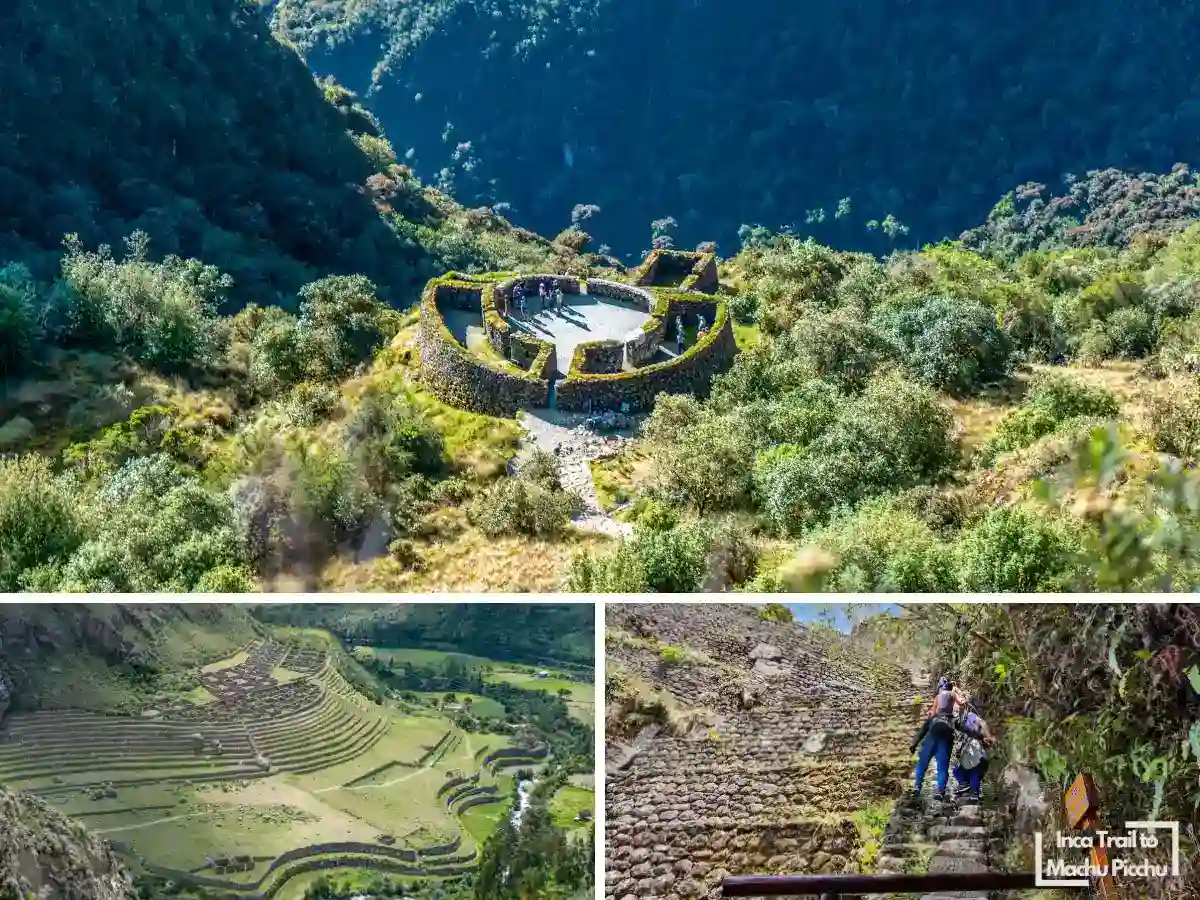
Classic Inca Trail 4 days stands out because it gives you more time on the trail and more archaeological depth than the shorter version
Best time and weather on the Inca Trail 4 Days
The best time to hike the Inca Trail 4 Days is usually during the dry season, especially from May to September. During these months, the trail is usually firmer underfoot, skies are often clearer, and the overall trekking experience feels more predictable.
That said, weather on the Inca Trail is never just one thing. The route crosses different altitude zones and ecosystems, so conditions can change throughout the day. During the rainy months, wet stones, mud, and reduced visibility can make the route feel much harder. During the dry months, trail conditions are generally better, but nights can still get cold and sun exposure can be intense.
| Season | What it usually means for the 4 day route |
| Dry season | Better trail conditions, clearer views, colder nights, and stronger permit pressure |
| Rainy season | Greener scenery, wetter trail sections, more slippery footing, and less stable weather |
If you want the full seasonal breakdown, read Best Time to Hike Inca Trail.
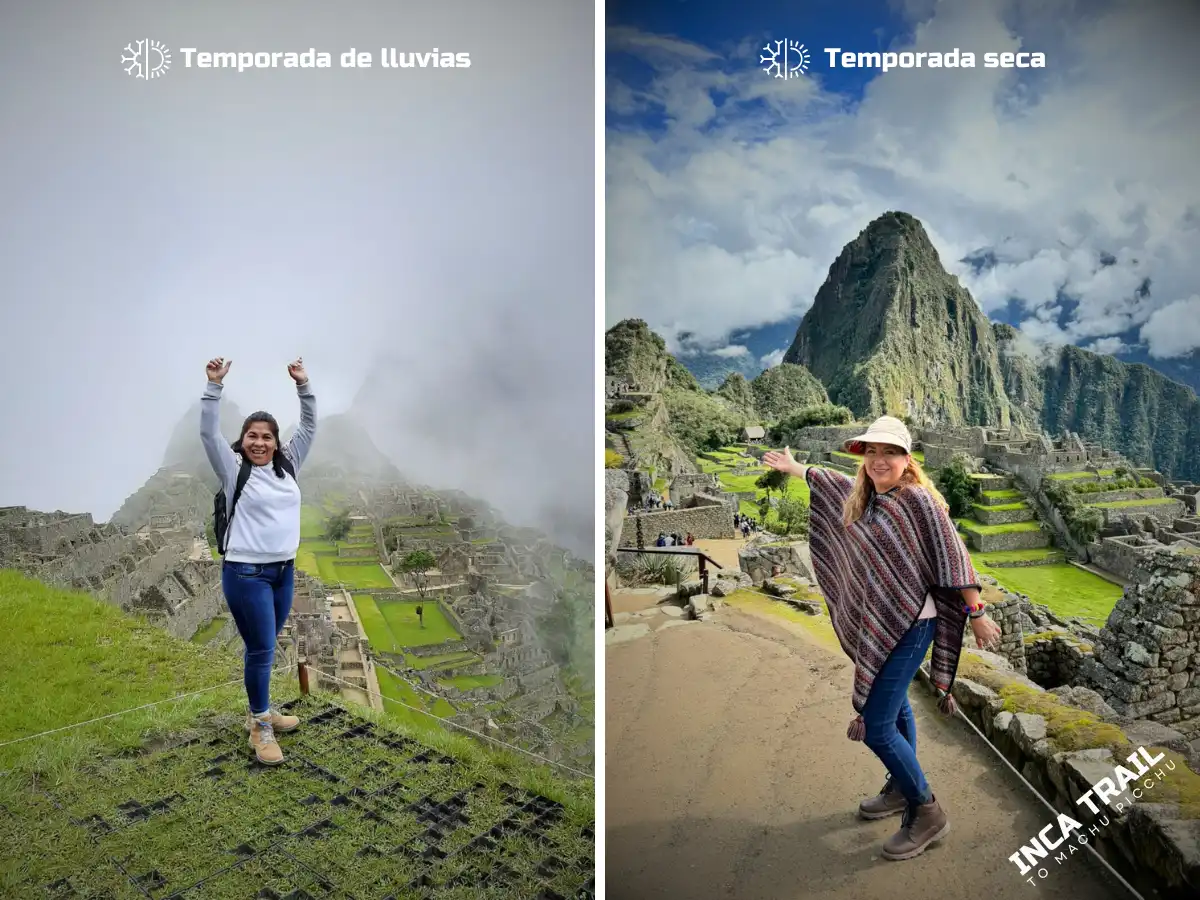
Rainy and dry season scenes on the Inca Trail show how much weather can reshape the route’s feel.
Permits, booking, and cost expectations
The Inca Trail 4 Days is one of the most competitive versions of the route when it comes to permits. The permit system is limited, and only part of the daily total corresponds to actual traveler spaces, which is why the classic route often sells out months in advance, especially in dry season.
You also cannot hike this route independently. It must be done through an authorized operator and with an official guide. If you are planning for popular travel months, early booking is one of the most important decisions you can make.
In pricing terms, the 4 day classic route usually sits in the middle of the Inca Trail range: more expensive than the Short Inca Trail, but often less than the 5 day version. For the complete planning picture, read Inca Trail Availability, and Inca Trail Price.
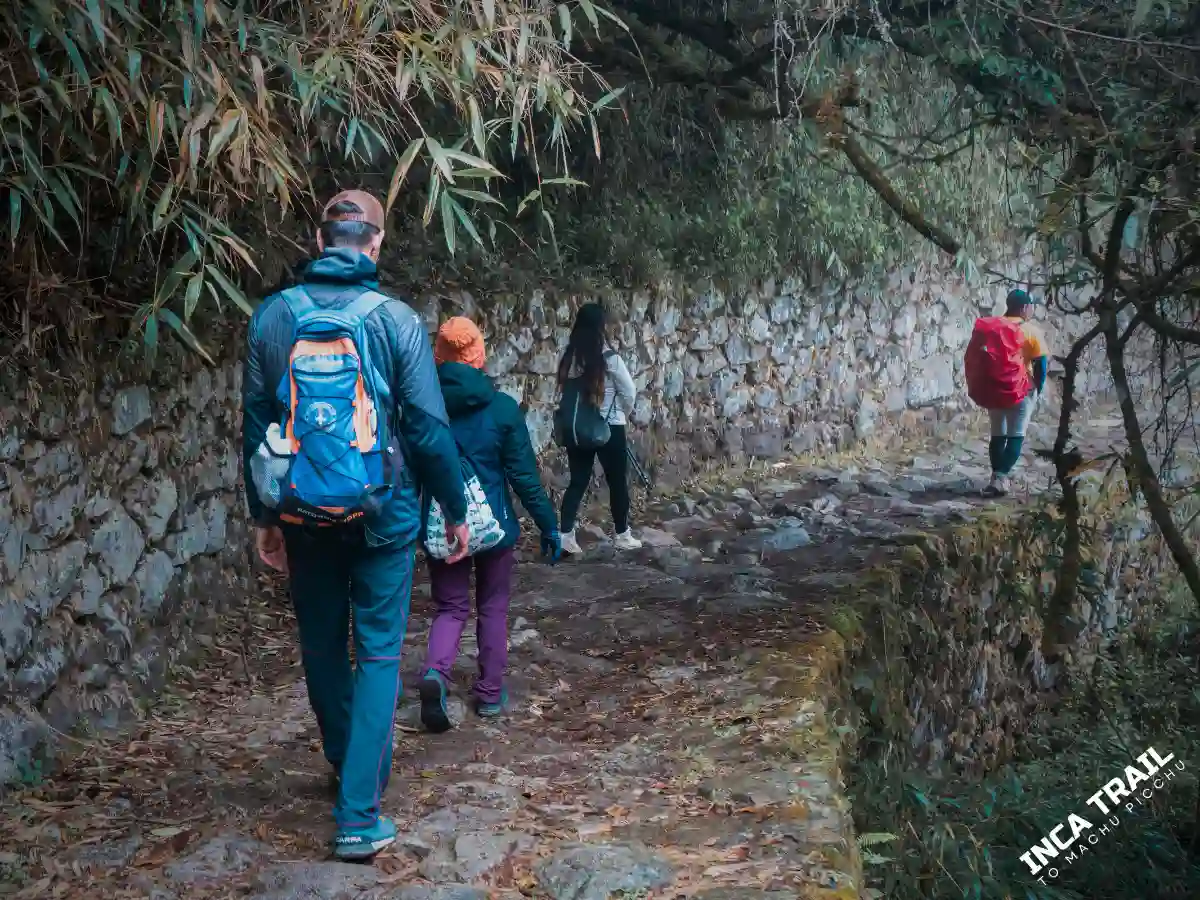
Securing your permit early is one of the most important steps before hiking the Inca Trail
How to prepare for the Inca Trail 4 Days
Preparation matters more on the classic route than on the shorter alternatives. You do not need elite athletic conditioning, but you do need enough endurance to handle repeated hiking days, altitude, and trail camping without the route feeling overwhelming.
Physical preparation and acclimatization
Months before the trek, uphill walking, stair workouts, hiking, cardio, and basic leg strength can make a big difference. Just as important, though, is acclimatizing in Cusco or the Sacred Valley before the trek. A stronger body and a better adjusted body are not the same thing, and the Inca Trail really rewards both.
If you want the focused support articles, read How to Train for Inca Trail, Inca Trail Altitude, and Essential Medications for Inca Trail.

The better your preparation is before arrival, the more enjoyable the Inca Trail 4 Days route usually feels on the ground
What should you bring?
The classic route makes packing especially important because you will be out on the trail for several days. The goal is not to carry everything. The goal is to carry the right essentials while keeping weight practical and trail friendly.
| Item | Why it matters |
| Backpack | You need a practical day setup that keeps essentials accessible and manageable |
| Hiking shoes or boots | Stone terrain, steep sections, and long descents demand proper support and traction |
| Layered clothing | Temperatures can shift fast between sunny sections and cold nights |
| Rain protection | Even in drier months, weather can still change quickly on the route |
| Sun protection | High altitude sun exposure wears many travelers down faster than expected |
| Water, snacks, and personal medication | These are key for stability, recovery, and overall trail comfort |
If you want the complete gear breakdown, read What to Bring on the Inca Trail, Best Inca Trail Shoes, and The Best Backpack for the Inca Trail.

Get ready for the Inca Trail with the essentials you really need
Final thoughts on the Inca Trail 4 Days
The Inca Trail 4 Days remains the defining version of the Inca Trail for a reason. It gives you the full route, the mountain passes, the archaeological depth, the camps, and the classic arrival at Machu Picchu that so many travelers dream about. It is more demanding than the shorter versions, but that is also part of what makes it feel so complete and so memorable.
If you are ready for the Classic Inca Trail, choose an agency that can guarantee the best possible experience from start to finish. Good preparation, organized logistics, quality equipment, and a reliable team can make a major difference in how safe, comfortable, and rewarding the trek feels. For a better planned and more dependable journey, you can explore certified options with Inkayni peru tours or Waman adventures
Ready to compare classic 4 day Inca Trail options with more confidence?
If this guide helped you understand what the Inca Trail 4 Days is really like, these are good next steps for comparing routes and services before you book:
- Inkayni Peru Tours: Short Inca Trail 2 Days and Classic Inca Trail 4 Days
- Waman Adventures: Short Inca Trail 2 Days and Classic Inca Trail 4 Days
