

Table of Contents
If you’re someone who seeks adventures off the beaten path, the Waqrapukara Trek is the experience you’ve been waiting for. Hidden deep within the Peruvian Andes, this horn-shaped Incan fortress is a mystery waiting to be discovered. With every step, you’ll delve into ancient history surrounded by breathtaking landscapes and mystical energy.
In this definitive guide, we offer everything you need to know to embark on an unforgettable adventure to Waqrapukara Peru: from the best times to visit to essential tips to prepare and fully enjoy this fascinating corner of Cusco.
General Information
What is Waqrapukara?
Waqrapukara is an ancient Incan complex in Cusco, Peru. Its name means “horn-shaped fortress” in Quechua, due to its structure atop a mountain with two peaks resembling horns. Known as the Waqrapukara archaeological site, it is renowned for its stone wall architecture, terraces, ceremonial enclosures, and viewpoints. It is believed to have been a religious and strategic center linked with rituals and astronomical observations. Additionally, its surroundings offer impressive views of the Apurímac River valley and a spectacular natural environment.
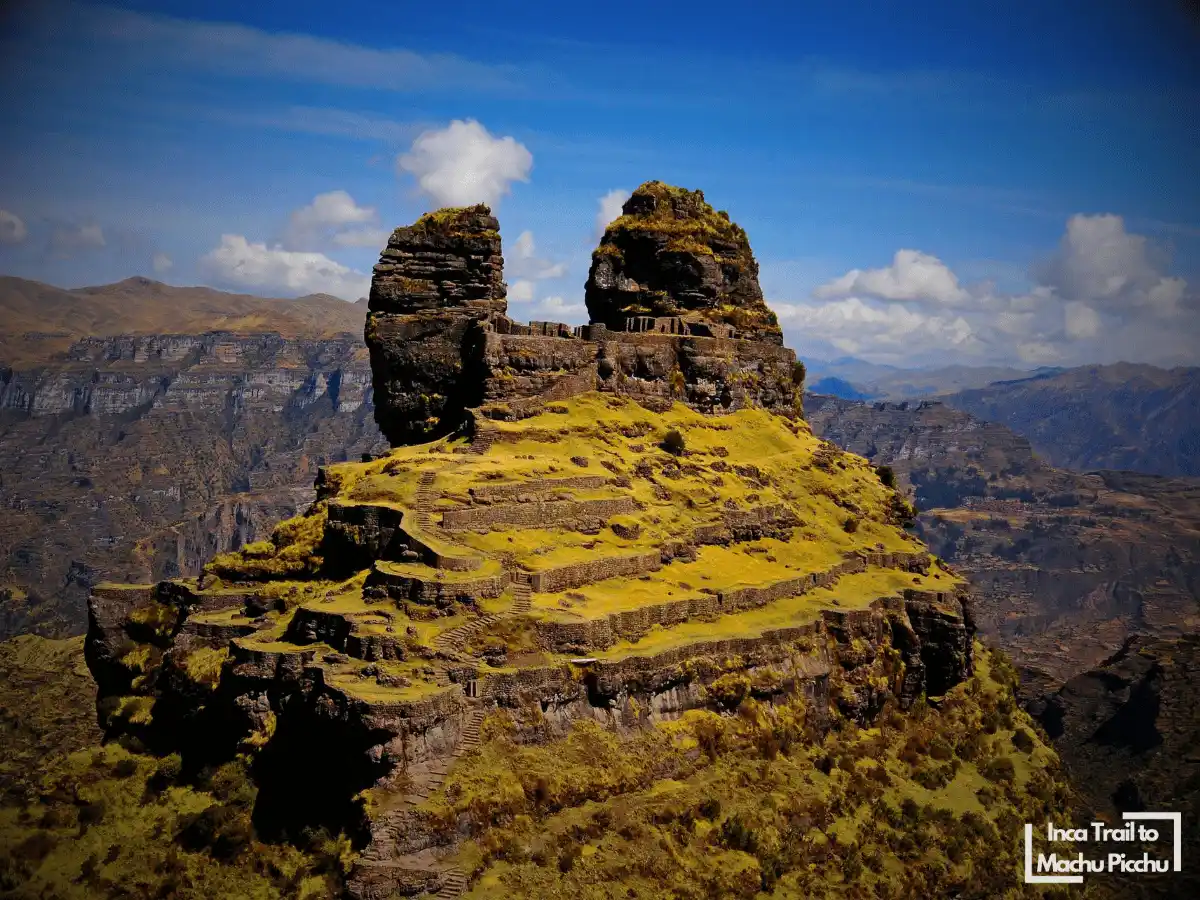
An impressive fortress perched atop a mountain.
A Brief History of Waqrapukara
It is believed that the fortress of Waqrapukara was initially built by the Canchis culture, which coexisted with the Incas. For this reason, they decided to settle south of the city of Cusco, amidst the mountains. Over time, it was discovered and studied, gaining recognition by the Government of Peru as a “Cultural Heritage of the Nation.” Today, it has become one of the new tourist attractions of Cusco.
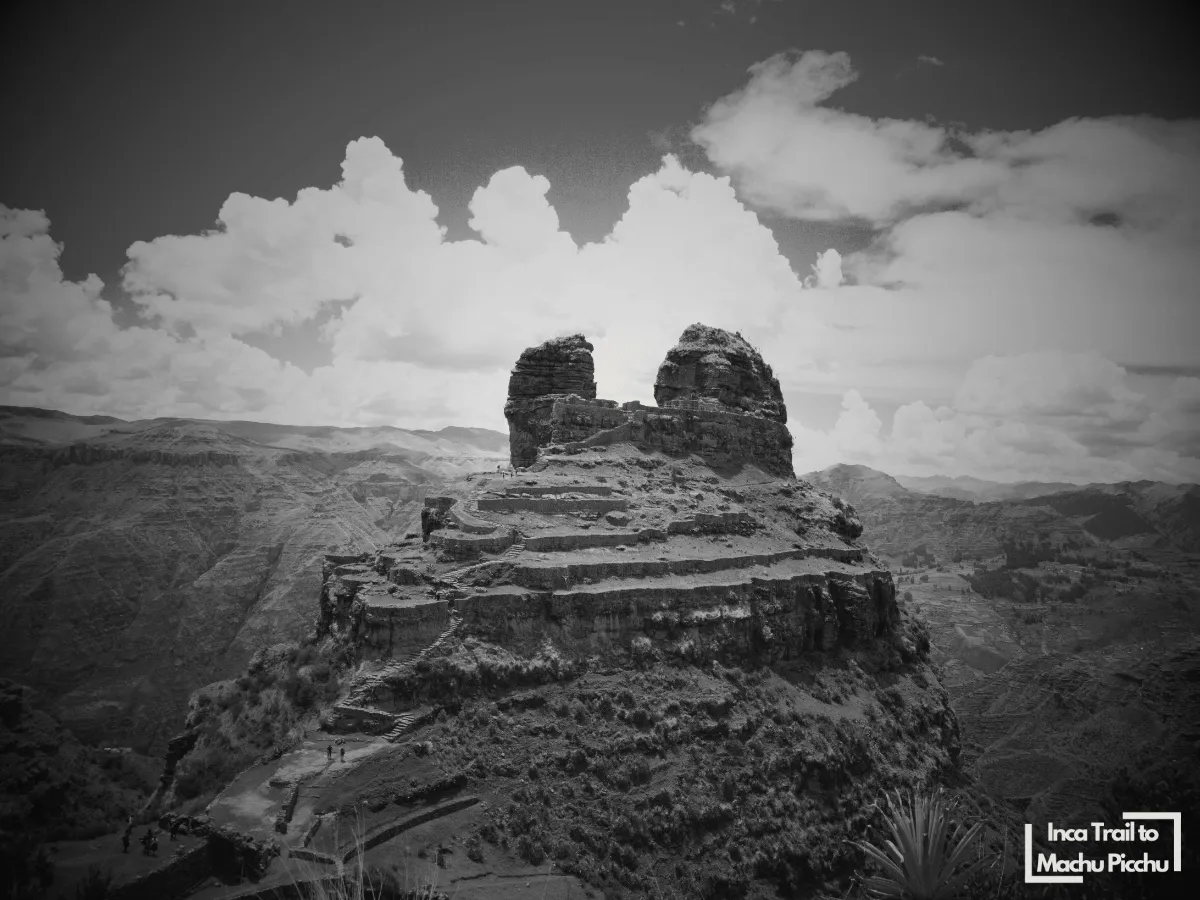
Discover the mysteries and most relevant facts of this Incan fortress.
Location and Features
Where is Waqrapukara?
This impressive Incan archaeological site is located in the highlands of the rural community of Hayqui, in the district of Acos, province of Acomayo, department of Cusco. Thanks to this privileged location, it remained intact for many years until its discovery and future promotion for tourism.
What is the Altitude of Waqrapukara?
The altitude of Waqrapukara is one of its most notable features, as this archaeological site is located approximately at 4,150 meters (13,582 feet) above sea level, surrounded by mountains and spectacular Andean landscapes.
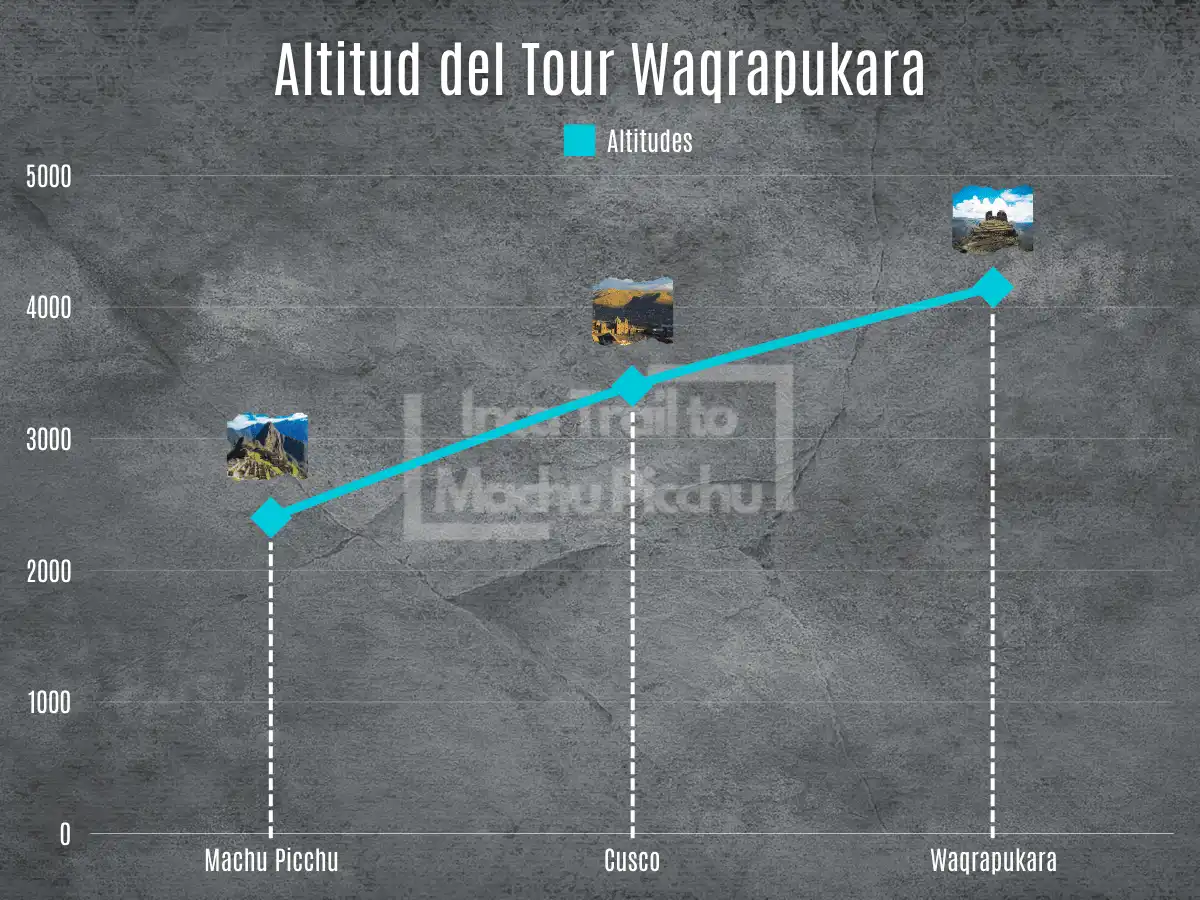
Consider the elevations when choosing between the Short Inca Trail or the Waqrapukara Trek.
Technical Details of the “Waqrapukara Tour”
Travel Time from Cusco to Waqrapukara
In general, the trip from the city of Cusco to Waqrapukara takes about 3 to 4 hours if you travel directly without stops. On the other hand, if you have a tour that includes breakfast and some stops, the journey could take up to 5 hours.
Difficulty of the Waqrapukara Trek
The hike to this archaeological complex is considered of moderate difficulty. However, keep in mind the route you choose to hike, as depending on your selection, the walk will be easier or more challenging. Also, consider your physical limitations and if you are traveling with children or seniors.
Visiting Hours and Entrance Fees
Currently, the entrance to the Waqrapukara archaeological site has a unique price of 10.00 soles (PEN) for nationals and 20.00 soles for foreigners. Its visiting hours are between 8:00 AM and 5:00 PM daily. Regarding its availability, it’s important to remember that it is open for visits every day of the year.
How to Get to Waqrapukara?
Waqrapukara Trek with a Travel Agency
This is your best option if you want to make the most of your trip, as it’s not just about transportation service but also the exceptional service of a guide who will provide you with all the appropriate information throughout the hike and the archaeological complex.
On Your Own
If you’re an explorer and like to go without a set itinerary, here’s what you should do:
- In Cusco: Take a bus that will take you to Sangarará in a 3-hour journey.
- In Sangarará: Once you arrive in this town, you can hire a local interpreter to accompany you along the hiking trail to the archaeological complex.
- During the Hike: This journey lasts an average of 3 to 4 hours, depending on your physical condition. Once you reach the site, you can explore it on your own.
- Return to Cusco: Back in Sangarará, you should board a bus back to the city of Cusco, thus ending your trip.
Summary of the Classic Waqrapukara Tour (Full Day)
It starts around 4:00 AM with a 2 to 3-hour trip to the town of Quiquijana, where travelers recharge with a delicious breakfast before starting the adventure. Then the journey continues, skirting the beautiful Pomacanchi Lagoon (the largest in the area), traversing an unpaved road until reaching the town of Sangarará, the last town before reaching the starting point of the hike.
Once the hike begins, you’ll enjoy beautiful views of the mountains and Andean landscapes until reaching the Waqrapukara archaeological site. There, you can rest for a few minutes before continuing with the exploration, which usually takes about 1 hour—enough time to unravel its secrets and learn more about the place.
At the end of the tour, we’ll begin the return hike along the same trail until we reach the private transport that will take us back to the city of Cusco.
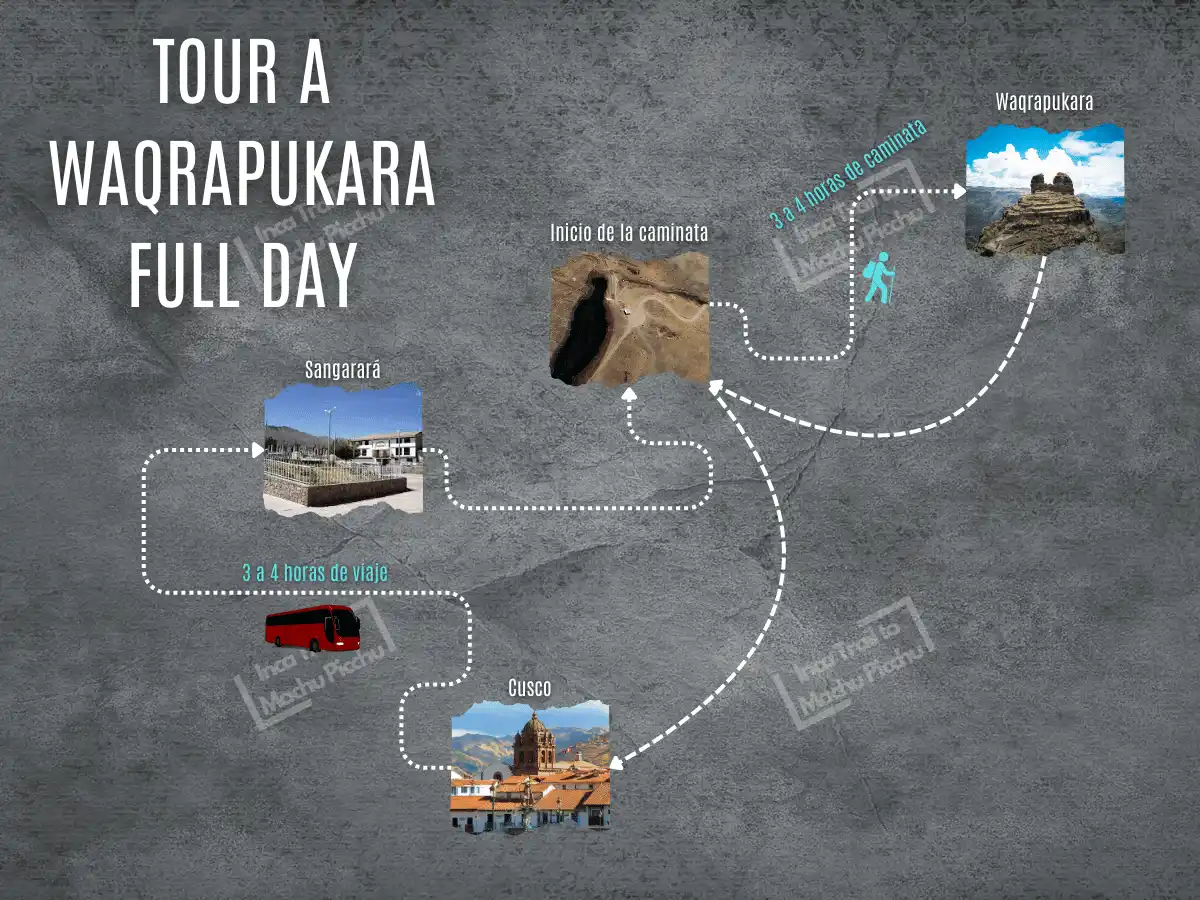
Consider these details to organize a great trip to this fortress.
Routes to Reach Waqrapukara:
Today, there are up to 6 trekking routes to reach Waqrapukara. Remember that the route will depend on your travel objectives and each agency’s offer. It is recommended to request updated information on the itinerary you are hiring.
- Route 1 | Santa Lucía – Waqrapukara: This is the most recommended and well-known route among adventurers heading to Waqrapukara. The distance between both points is short and can be walked in approximately one hour each way. Therefore, many travelers and travel agencies choose this route for the Waqrapukara Trek.
- Route 2 | Acomayo – Wayqui – Waqrapukara: An alternative route that takes you through a winding path to Wayqui, with a bus or private vehicle trip from Cusco lasting about 3 hours. From there, the hike to Waqrapukara takes approximately 3 hours each way.
- Route 3 | Cusco – Acomayo – Waqrapukara: Another option to reach Waqrapukara, departing from the city of Cusco and arriving at Acomayo. The hiking time is approximately 4.5 hours each way, making it a more demanding route, ideal for travelers seeking new challenges.
- Route 4 | Campi – Waqrapukara: On this route, the hike to Waqrapukara from Campi takes at least 3 hours each way. The bus trip to the starting point of the hike is approximately 3 hours.
- Route 5 | Sangarará – Waqrapukara: This route is recommended for its impressive views of landscapes and the Apurímac River canyons. The bus trip from Cusco to Sangarará takes about 3 hours, followed by a winding road to the hike’s starting point at Punta Carretera. The hiking time from this point is approximately 2 hours on the way there and over 3 hours on the return, as it’s uphill.
- Route 6 | Pitumarca – Waqrapukara: This is the least traveled route to Waqrapukara but is very popular among hiking enthusiasts. The hike from Pitumarca is approximately 6 hours, so travelers who choose this route usually spend at least 2 days on this adventure to enjoy sunrises and sunsets during the journey.
Waqrapukara trek weather
The climate at the Waqrapukara archaeological site is cold and dry for most of the year. During the day, temperatures can reach up to 23°C (73°F), which is warm, but don’t be fooled, as you’ll still feel chilly winds coming from the surrounding mountains.

You’ll enjoy different environments as you traverse the trail and the archaeological complex.
What is the Best Time to Visit Waqrapukara?
Like many destinations in Cusco, the best season to explore this beautiful trekking trail and visit the Waqrapukara archaeological site is during the dry season, from April to October.
How Cold is Waqrapukara?
Due to its high altitude and proximity to the Apurímac canyon, the climate is dry and windy, so you should always stay warm. If you plan to camp nearby, be aware that nighttime temperatures drop to around 4°C (39°F).
Preparing for the Trip
What to Wear When Visiting Waqrapukara?
Clothing plays a crucial role in enjoying comfort throughout your trip, allowing you to adapt to the different climates and environments you’ll visit during the day. The following items are essential to conquer this unique journey to the Waqrapukara Trek:
- Windbreaker jacket: It will protect you from the chilly winds coming from the mountains and any potential rain.
- Warm jacket: It helps maintain your body heat optimally, regardless of temperature drops.
- Trekking pants: Walking with freedom and comfort will make your entire ascent and descent experience incredible.
- Trekking shoes: Nothing beats the comfort of good trekking shoes for stability and protection with every step.

Choose your hiking shoes appropriately and embark on the adventure.
What to Bring to Waqrapukara?
While appropriate clothing already ensures a great experience, if you want to enhance and add extra protection and comfort to your trip, you should carry extra accessories in your travel backpack (25 liters), such as:
- Sunglasses
- Sunscreen
- Hat
- Water
- Snacks
- Trekking poles (rubber tip)

Choosing the right backpack will make your trip a light activity.
Travel Experience
What is the Hike to Waqrapukara Like?
Setting aside the duration and difficulty of this trail (depending on the chosen route), the hike to Waqrapukara is a great opportunity to escape the crowds of more well-known tourist attractions, allowing you to enjoy a peaceful experience among the mountains and the area’s natural beauty.
You’ll also observe beautiful Andean landscapes and take the best photos for memories, with the final reward of exploring the mysterious Waqrapukara archaeological site, where you can enjoy the tour at your own pace with the most complete explanation of its history.
Flora and Fauna on the Waqrapukara Trail
Embarking on the magical Waqrapukara Trek is not just about impressive architecture and natural landscapes but also about the nature that unfolds majestically with every step.
The native flora envelops you in a hug of colors and scents that awaken the senses, with native plants like achanqaray, qantu, chillka, tankar, ichu, qeto, panti, and totora.
The fauna is equally impressive; from the heights, we can observe the flight of majestic hawks, eagles, and condors. On solid ground, agile vicuñas, pumas, deer, foxes, and skunks will accompany us throughout the journey—just be observant and patient with nature.
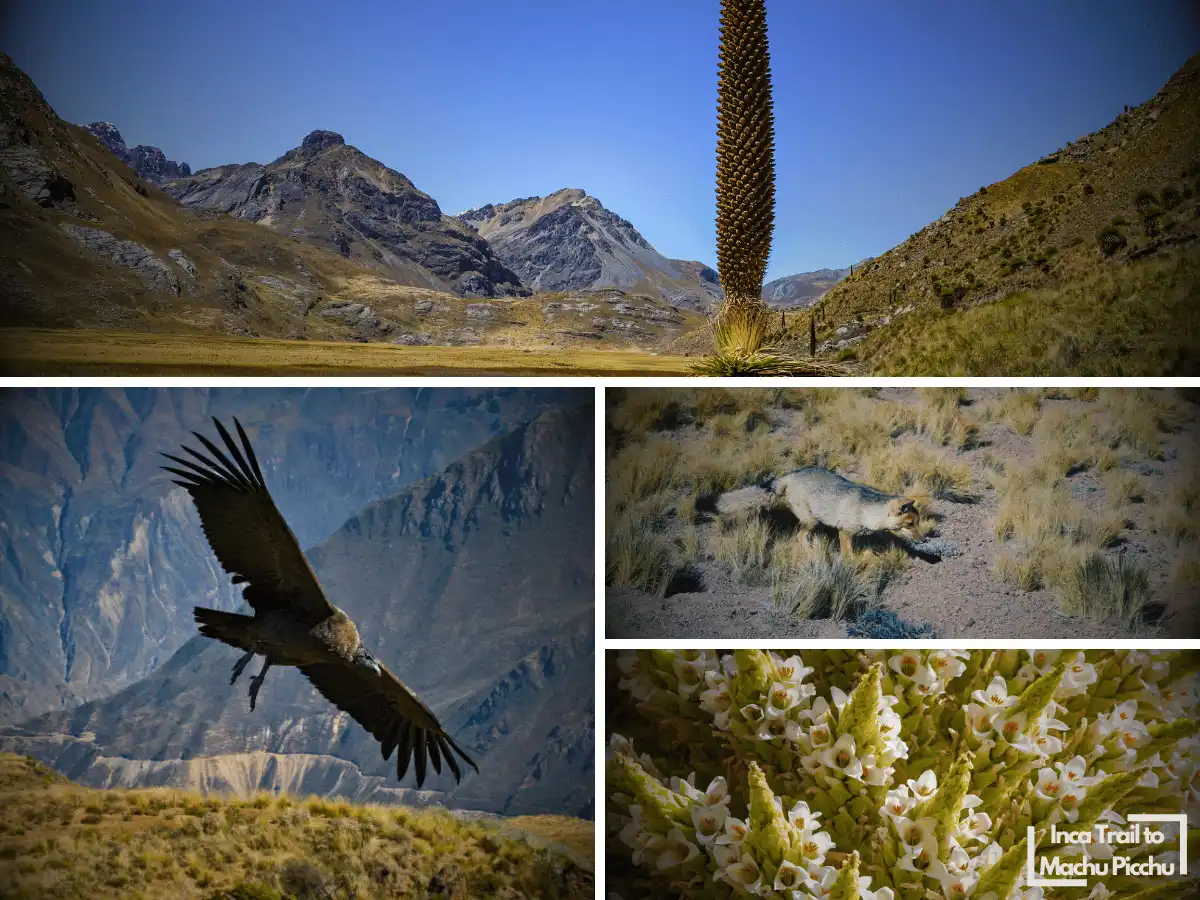
Get your camera ready to capture these unique details of the route.
Traditional Life and Culture of the Communities
During your trip, you’ll also have the opportunity to learn more in-depth about the culture and traditions of the area, as we’ll pass through villages where people still maintain many existing customs, and their lifestyle transports you to the past. If you wish, you can interact with the local residents, who will be happy to share their knowledge and make your experience more profound.
Arrival at Waqrapukara
While it’s true that you can get a preview of Waqrapukara during the last part of your hike, nothing compares to arriving at the archaeological complex and witnessing the magnificence of this incredible site. Make sure your camera is ready to capture the best photos of the place, which you can share on your social networks.
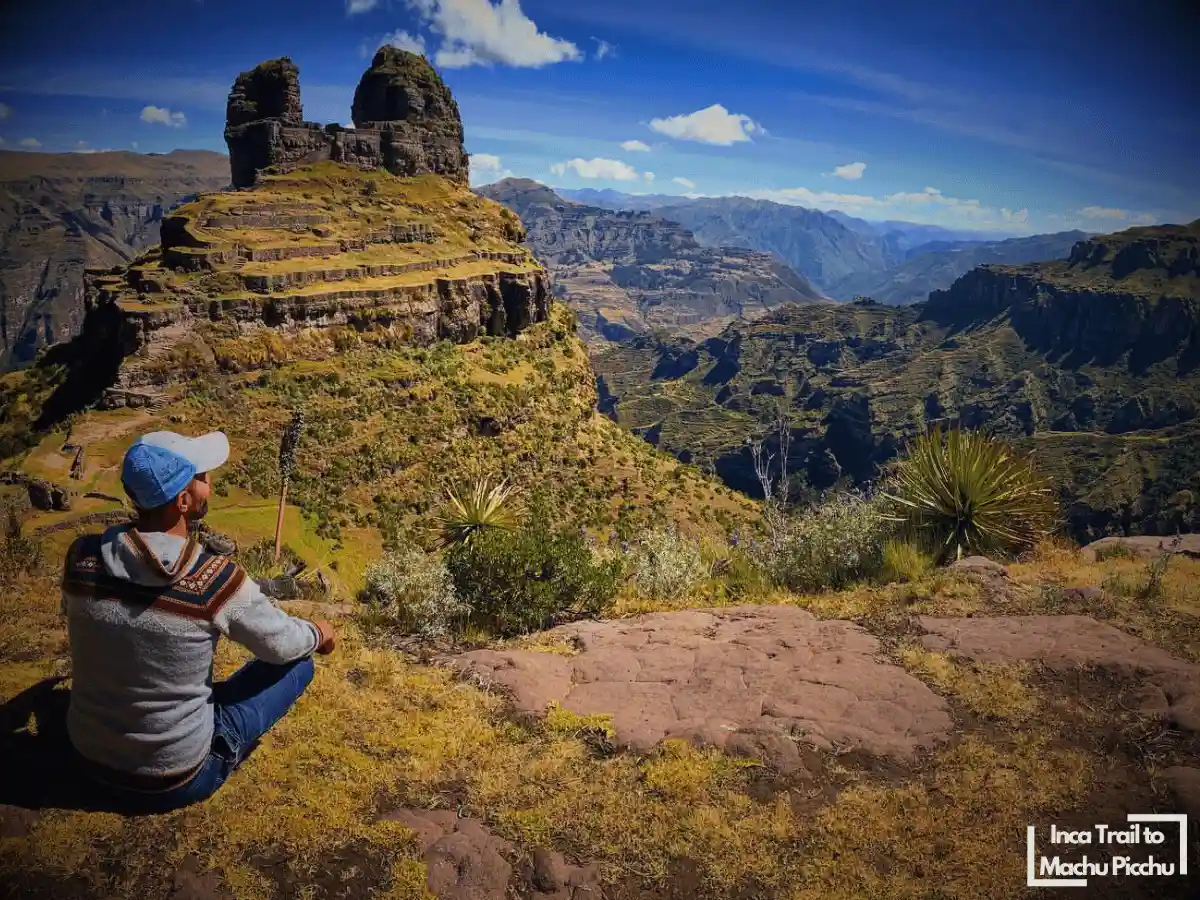
An experience you’ll want to relive!
What to See in Waqrapukara?
A great question, because beyond the panoramic and external views of the complex, this place holds much more. For better understanding, we’ll inform you that it’s divided into two sections: the upper zone and the lower zone, each with its own characteristic constructions.
- Upper Zone: In this part, you’ll find the highest quality buildings, and between the two horn-shaped rocky mounds, you’ll also find impressive constructions.
- Lower Zone: You’ll traverse the impressive terraces with an average size of 2 meters.
Reception at the Site and Entry Registration
Don’t forget the important part of presenting your entrance ticket to the Waqrapukara archaeological site, as without it, your access won’t be possible. If you’re traveling on your own, make sure you’ve packed it and have it always at hand. On the other hand, if you’re traveling with a travel agency, your professional guide will handle the documentation for you.
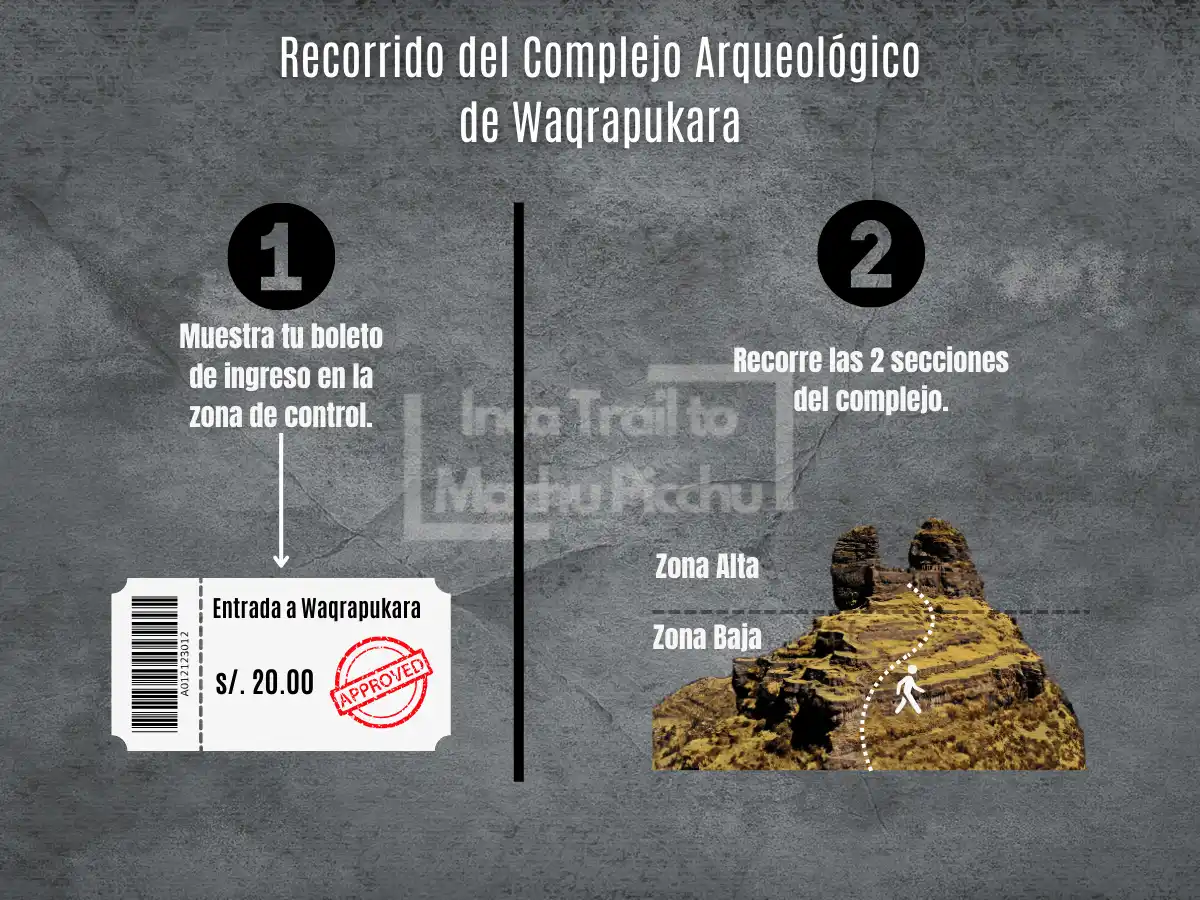
During your tour, avoid entering prohibited areas.
How to Have the Best Tour?
During your visit to different archaeological sites, you should consider the following recommendations to enjoy a complete, safe, and informative experience:
- Don’t stray: Stay with your guide and travel group so you can enjoy all the explanations and not miss any details. Remember that your guide will provide you with sufficient time to take souvenir photos and explore some places further.
- Consume your food and drinks appropriately: We’re not suggesting you restrict your snacks and water, but remember to do so moderately, as traveling between different cities could upset your stomach. Also, overeating could cause dizziness or stomach discomfort.
- Prepare your camera: Throughout your tour, you’ll visit beautiful places in a set time, so it’s ideal to have your phone or camera handy to capture all possible scenes.
- Always have your protective gear with you: Remember that this is a journey exposed to nature, so intense sun, rain, or winds are always lurking. Therefore, you should always be ready with sunscreen, a hat, sunglasses, a windbreaker/warm jacket, and good trekking shoes.
Tips for a Safe and Respectful Visit
During your tour of Waqrapukara, it’s very important to respect the site’s rules, considering your guide’s recommendations. Remember that you’re in a sacred place of great cultural value for humanity, and violating or damaging any part could lead to serious penalties.
- Stay on the permitted trail; this recommendation is mainly for travelers who have decided to go on their own.
- Respect the signs; there are areas where you cannot access or set foot on any construction.
- Camp carefully. If you wish to spend a night, do so in the designated area and do not light a campfire.

Keep these tips in mind and be part of responsible travelers.
Recommendations to Minimize Environmental Impact
We know that food and hydration during the tour are vital; however, we ask that you do not leave your waste in the complex or along the hiking trail. This way, we can properly care for this beautiful tourist attraction, generating the least environmental impact, considering the following tips:
- Do not litter: You can carry water and food in reusable containers to ensure you don’t leave them scattered on the ground.
- No campfires: During your camping, avoid making a fire; if you do, be very careful.
- Noise pollution: Avoid bringing speakers; the abundant flora and fauna during the tour could be negatively impacted by acoustic pollution.
Mystical Tourism
If you’re wondering whether it’s possible to have a deeper and spiritual experience during your visit to Waqrapukara, the answer is yes. However, we must consider that not all agencies offer this service, so it’s very important to consider the reliability, experience, and track record of the company you’re hiring.
It’s also relevant to be up-to-date with your medical check-ups, as being in good health will allow you to be safer and fit to have this endearing experience.

Due to its special location, the place offers the opportunity to connect and live a more mystical experience.
Ecotourism (Requires More Days)
Ecotourism in Waqrapukara is an increasingly popular option for travelers interested in exploring Peru’s nature and history sustainably. This archaeological site, considered a sacred Incan place, offers an immersive experience that combines scenic beauty, biodiversity, and Andean culture.
Festival of Waqrapukara (August)
The Festival of Waqrapukara is celebrated every August and is one of the most important festivities in the Cusco region surrounding the Waqrapukara archaeological site. This festival aims to pay homage to the sacred mountain, preserve local traditions, and promote the cultural identity of the Andean communities inhabiting the area.
Key Points:
- Moderate Difficulty: The Waqrapukara Trek is not as demanding as other hikes in Cusco, making it an ideal option for those seeking an accessible yet rewarding challenge.
- Cultural and Spiritual Richness: This trek is an opportunity to closely experience local rituals and traditions, especially if visited during the Festival of Waqrapukara.
- Stunning Landscapes: The hike offers panoramic views of the Apurímac River valley, unique geological formations, and the presence of native fauna and flora.
In conclusion, the Waqrapukara Trek is more than just a hike; it’s a journey into the heart of Andean spirituality and a deep connection with the history and nature of the Peruvian Andes. It’s perfect for those seeking an authentic and less crowded experience, where scenic beauty meets cultural richness.
Frequently Asked Questions (FAQs)
Which hike is more difficult, Waqrapukara or Rainbow Mountain?
Considering factors of altitude and trekking, the tour to Rainbow Mountain is much more complex, as it can reach up to 5,036 meters (16,522 feet) above sea level, and the hike can last between 1 and 3 hours, depending on your physical condition and prior acclimatization.
How far is Waqrapukara from Lima?
Waqrapukara is approximately 960 km (kilometers) away from Lima in a straight line. However, the distance by road is considerably longer due to the mountainous geography and the route that must be taken.
How far is Waqrapukara from Cusco?
If you’re in the city of Cusco (recommended starting point) and want to visit this archaeological complex, the Incan fortress of Waqrapukara is approximately 116 km (72 miles) away by land.
Can you swim in Waqrapukara?
No, you cannot swim in Waqrapukara. Waqrapukara is an archaeological site located in the mountains of Cusco, at an approximate altitude of 4,300 meters (14,108 feet) above sea level. There are no large lakes or rivers suitable for swimming in the immediate surroundings of the site.
Can you go to Waqrapukara without hiking?
No, because the archaeological site is several kilometers away from any populated center in the area. Currently, the only way to reach it is through hiking, so you should be prepared to face the challenge of an adventure among the mountains.
Are there bathrooms during the hike to Waqrapukara?
Currently, there are no sanitary facilities during the hike, so we remind you to use them whenever you have the opportunity. Similarly, avoid excessive intake during breakfast; eat only what’s necessary and properly ration your water intake.
How to Get to Waqrapukara from Cusco?
To reach this archaeological complex from Cusco, there are two ways: through a tour with a travel agency (the most recommended) and on your own. Keep in mind that regardless of your choice, the trip is southbound and takes approximately 3 to 4 hours.
At What Time Are Departures to Waqrapukara?
The Waqrapukara Tour offered by most agencies is a one-day trip, known as “Full Day,” and usually starts between 3:30 AM and 4:30 AM. This is due to the travel distance (3 hours each way) and the hiking time (depending on the offered route). The return time to the city of Cusco is approximately 7 PM, which will give you enough time to have dinner before heading to your hotel for a well-deserved rest.
Waqrapukara Trek: An Epic Adventure Among the Mountains
The Waqrapukara Trek is a unique experience that combines adventure, history, and the spirituality of Andean culture. This hike takes travelers through spectacular landscapes where towering mountains, deep gorges, and rocky formations blend with the richness of a highly valuable historical and spiritual archaeological site. Known as the “fortress with horns,” Waqrapukara not only offers impressive Incan architecture but also invites you to connect with nature and the Andean worldview.
