


Is the Inca Trail worth it?
Yes, the Inca Trail is worth it if you want more than a regular hike to Machu Picchu. The route combines original Inca paths, exclusive archaeological sites, changing Andean landscapes, a real physical challenge, and the unforgettable arrival through the Sun Gate. It is especially worth it for travelers who value history, scenery, guided support, and a deeper connection to the journey, not just the final destination.
Table of Contents
Many travelers ask, is the Inca Trail worth it, because this trek takes more planning, money, and physical effort than simply taking the train to Machu Picchu. The Inca Trail is not the easiest way to reach the citadel, but it can be one of the most powerful ways to experience it.
What makes this route special is everything that happens before Machu Picchu. You walk original Inca stone paths, cross high mountain landscapes, pass archaeological sites most visitors never see, and finally reach the citadel through Inti Punku, the Sun Gate. The reward is not only arriving at Machu Picchu, but feeling the journey that leads you there.
In this guide, you will get a clear look at why the Inca Trail is worth it for many travelers, when it may not be the right fit, and how to decide between the Classic and Short versions. If you want the broader route context first, start with The Ultimate Inca Trail Guide.

Camps, shared meals, and long walking days are part of what makes the Inca Trail so memorable
Why is the Inca Trail worth it for many travelers?
The Inca Trail is worth it because it combines several experiences in one route: history, scenery, archaeology, physical effort, guided interpretation, and the emotional arrival at Machu Picchu. Very few treks give you that combination in such a concentrated way.
It is not just about walking from one point to another. The route builds gradually. Each day adds something different: higher mountains, changing ecosystems, Inca sites, camp life, stone stairways, and finally the first major view of Machu Picchu from the Sun Gate.
| What makes it worth it | Why it matters for travelers |
| Original Inca route | You are walking a historic path, not just taking a scenic trail to a viewpoint |
| Archaeological sites | The route includes important Inca sites before you even reach Machu Picchu |
| Changing landscapes | The trail moves through mountains, cloud forest, valleys, and high Andean scenery |
| Physical challenge | The effort makes the final arrival feel more meaningful and earned |
| Sun Gate arrival | You enter Machu Picchu through one of the most iconic approaches to the citadel |
| Guided support | A guide adds historical context, pacing support, and a stronger sense of place |
The Inca Trail is not just a hike to Machu Picchu
One of the biggest reasons the Inca Trail is worth it is that the route changes how you experience Machu Picchu. Instead of arriving directly by train and bus, you approach the citadel through a multi day journey that follows part of the historic Inca road network known as the Qhapaq Ñan.
That historical context matters. Along the trail, you do not only see mountain views. You pass through terraces, stone stairways, ceremonial spaces, and archaeological sites that show how carefully the Incas connected landscape, architecture, and movement. For travelers who care about history, this is where the route becomes much more than a physical challenge.

Stone roads, terraces, and water channels reveal the skill behind the Inca Trail
The archaeological sites make the route feel exclusive
One of the strongest reasons the Inca Trail is worth it is that Machu Picchu is not the only archaeological reward. Long before you reach the citadel, the route begins to reveal Inca sites hidden among mountains, cloud forest, terraces, and stone paths. That makes the experience feel less like a single destination and more like a story unfolding step by step.
Sites such as Llactapata, Runkurakay, Sayacmarca, Phuyupatamarca, Intipata, Wiñay Wayna, and Inti Punku give the trail a depth most regular Machu Picchu visits do not have. Each stop adds context to the landscape and helps you understand why this route mattered historically, spiritually, and strategically. For a deeper explanation of each site, read Inca Trail Archaeological Sites.
| Archaeological highlight | Why it adds value to the trek |
| Llactapata | Introduces the agricultural and settlement side of the route early in the trek |
| Runkurakay | Adds a sense of route control and movement through the mountains |
| Sayacmarca | Shows how Inca architecture adapted to steep and strategic terrain |
| Phuyupatamarca | Connects high altitude scenery with ceremonial architecture |
| Wiñay Wayna | One of the most memorable sites before the final approach to Machu Picchu |
| Inti Punku | The Sun Gate creates the iconic first approach to Machu Picchu from the trail |
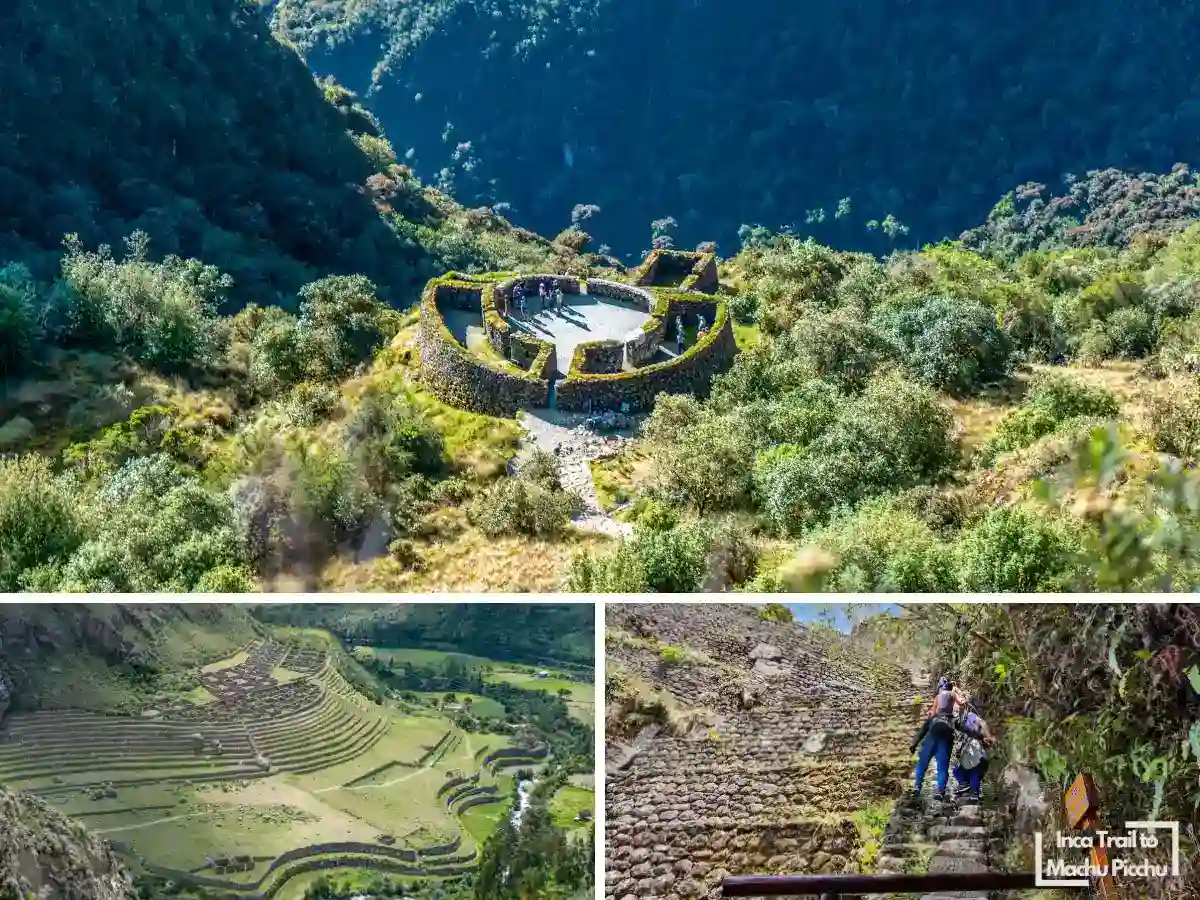
Explore the different archaeological sites found throughout the Inca Trail
The landscapes change constantly along the route
The Inca Trail is worth it for travelers who want visual variety. The route does not stay in one type of scenery for four straight days. It moves through high Andean sections, cloud forest, mountain valleys, stone stairways, and archaeological zones that seem to appear at exactly the right moment.
This changing scenery is one reason the trek feels so memorable. Dry season usually brings clearer views and more stable hiking conditions, while the rainy season can bring mist, greener vegetation, and a more atmospheric feel. If weather is a key part of your planning, read Best Time to Hike Inca Trail.

Different weather scenes on the Inca Trail show how the route can shift from bright skies to misty mountain conditions.
The challenge is part of the value
The Inca Trail is not worth it because it is easy. It is worth it because the challenge adds meaning to the experience. On the Classic route, hikers cover about 26 miles (43 km) over several days and reach 13,828 ft (4,215 m) at Dead Woman’s Pass. That combination of distance, altitude, stone steps, and repeated effort is what makes the final arrival feel so satisfying.
Still, the challenge should be understood clearly. This is not an extreme expedition for elite athletes, but it is a real mountain trek. Travelers who prepare physically, acclimatize in Cusco or the Sacred Valley, and walk at a steady pace usually enjoy the route much more. For more detail, read Inca Trail Difficulty, Inca Trail Altitude, and How to Train for Inca Trail.

A hiker celebrating at a high point shows the reward that comes after strong physical preparation for the trail.
The Sun Gate arrival changes the way you see Machu Picchu
For many travelers, the strongest reason the Inca Trail is worth it is the arrival. After days of walking, the first major view of Machu Picchu from Inti Punku, the Sun Gate, feels completely different from arriving by bus. The citadel appears as the reward for the journey, not just as a place you reached on a schedule.
That emotional buildup is difficult to recreate in any other way. The trail gives Machu Picchu a sense of context. By the time you reach it, you have already walked through parts of the landscape, architecture, and route system that made this place meaningful in the first place.

Seeing Machu Picchu from the trail gives the citadel a different emotional weight than arriving directly by bus.
Is the Inca Trail worth the price?
For many travelers, yes, but it depends on what you value. The Inca Trail usually costs more than simpler hikes because it includes limited permits, guide support, logistics, meals on the Classic route, camping organization, porter support, transportation, and Machu Picchu entry. You are not only paying for trail access. You are paying for a regulated trekking experience.
If your priority is the cheapest way to reach Machu Picchu, the Inca Trail may not be the best fit. But if you want the classic route, historical context, archaeological sites, guided support, and the Sun Gate arrival, the value becomes much easier to understand. For a clearer budget breakdown, read Inca Trail Price.
Permits make the experience limited, but also more controlled
Another reason the Inca Trail is worth it for many travelers is its limited access. The route is not open to unlimited daily traffic, and permits are required. That can make planning harder, but it also helps protect the trail, control visitor flow, and preserve the experience.
This exclusivity is part of the appeal, but it also means you should not wait until the last minute. If you are serious about hiking the Classic route, plan early and confirm availability before building the rest of your Peru itinerary. For the permit side, read Inca Trail Availability and Permits.

The Inca Trail brings together iconic scenery, ancient paths, and the feeling of walking into history
Is the Inca Trail worth it for nature lovers?
Yes, especially if you enjoy landscapes that change as you walk. The trail passes through different environments where you may see orchids, bromeliads, birds, cloud forest vegetation, and high mountain views. Nature is not just background scenery here. It is part of how the route unfolds.
Still, this article should not try to become a full flora and fauna guide. If nature is one of your main interests, read Birds of the Inca Trail, and Inca Trail Wildlife.

Flora and fauna around Dead Woman’s Pass reveal that even the harshest sections of the route hold surprising life.
Classic vs Short Inca Trail: which one is more worth it?
The Inca Trail is worth it in different ways depending on the route you choose. The Classic 4 day route offers the full mountain experience, camps, high passes, more archaeological sites, and the strongest sense of journey. The Short Inca Trail gives you a lighter version with a real section of original trail, important ruins, and the Sun Gate arrival without committing to four days on the mountain.
| Route | Why it is worth it | Best for |
| Classic Inca Trail 4 Days | The full route experience, camping, high passes, archaeology, and stronger sense of achievement | Travelers who want the complete Inca Trail journey |
| Short Inca Trail 2 Days | A lighter hike with original trail sections, Wiñay Wayna, and the Sun Gate approach | Travelers with less time, mixed fitness levels, or a preference for more comfort |
If you are still deciding, read 2 Day Inca Trail vs 4 Day Inca Trail
When the Inca Trail may not match your travel style
The Inca Trail is worth it when you want Machu Picchu to feel like the reward for a real journey. But if you prefer a faster, easier, more flexible, or lower cost way to visit the citadel, another route may fit your trip better.
The Inca Trail is designed for travelers who want history, scenery, effort, and a guided mountain experience before reaching Machu Picchu. If that sounds like the kind of adventure you are looking for, this route will probably feel worth every step.
| The Inca Trail may not be for you if… | What may fit better |
| You want the fastest way to see Machu Picchu | A train based Machu Picchu visit may be more practical |
| You want the cheapest possible trip | A simpler itinerary may fit your budget better |
| You do not want several days of hiking | The Short Inca Trail or a regular Machu Picchu visit may be a better match |
| You prefer maximum independence | Routes like Salkantay or Lares may offer more flexibility |
| You are worried about altitude or physical effort | Extra acclimatization, basic training, or the Short Inca Trail can make the experience more manageable |
Who will probably find the Inca Trail worth it?
The Inca Trail is usually most worth it for travelers who want the journey to matter as much as the destination. If you are interested in history, archaeology, landscapes, photography, active travel, and the feeling of earning your arrival at Machu Picchu, this trek can feel unforgettable.
- Active travelers who want a meaningful physical challenge
- History lovers who want more context before Machu Picchu
- Photographers who enjoy changing light, mountains, ruins, and cloud forest scenes
- First time Peru travelers who want the classic trek experience
- Couples or groups who want a shared challenge and a strong travel memory
- Travelers choosing the Short route who want a lighter but still meaningful version

Rest stops, campsite moments, and trail scenes that shape a more comfortable Inca Trail journey.
For many travelers, the shared effort becomes part of what makes the Inca Trail stay memorable long after the trek ends.[/caption>
How to make the Inca Trail feel more worth it
The Inca Trail feels much more rewarding when you prepare for the parts that actually affect the experience. That means booking early, choosing the right route version, training enough to feel comfortable on long walking days, acclimatizing before the trek, and packing with the weather and altitude in mind.
- Book early: permits are limited, especially for the Classic route
- Choose the right version: Classic for the full experience, Short for a lighter route
- Acclimatize first: spend time in Cusco or the Sacred Valley before hiking
- Prepare physically: focus on walking, stairs, hills, and leg endurance
- Pack smart: bring layers, good shoes, sun protection, and rain gear
- Choose a reliable operator: logistics, guides, food, and support can shape the whole experience
For practical planning, read What to Bring on the Inca Trail, Inca Trail Food, and Inca Trail Without a Guide.
Ready to Choose Your Inca Trail Experience?
The Inca Trail is worth it when you want the route to Machu Picchu to feel like part of the reward. The history, landscapes, archaeological sites, effort, and Sun Gate arrival make the trek feel deeper than a regular visit to the citadel.
If that is the experience you are looking for, this is a good moment to compare the route style that fits you best. With the right operator, good logistics, and reliable guides, the Inca Trail can feel more comfortable, organized, and memorable from the very first day. You can explore Inkayni Peru Tours or Waman Adventures and choose the option that best matches your pace, comfort level, and travel goals.
Ready to choose the Inca Trail experience that fits you best?
If this guide helped you decide whether the Inca Trail is worth it, these are good next steps for comparing routes and booking with better support:
- Inkayni Peru Tours Short 2 Day and Classic 4 Day
- Waman Adventures Short 2 Day and Classic 4 Day
