


What is the Inca Trail 5 Days, and who is it best for?
The Inca Trail 5 Days is the slower paced version of the Classic Inca Trail to Machu Picchu. It follows the same sacred route but spreads the hiking across 5 days and 4 nights, giving you more time to acclimatize, explore key archaeological sites, and enjoy the trail with less daily pressure. For travelers who want the full Inca Trail experience without rushing through it, this is often the most balanced version of the route.
Table of Contents
The Inca Trail 5 Days is one of the best options for travelers who want the classic route to Machu Picchu but at a more relaxed pace. Instead of compressing the effort into four days, this version gives you more breathing room between major trail sections and more time to absorb the landscapes, camps, and archaeological highlights along the way.
That slower rhythm is what makes this version so appealing. You still follow one of the most famous trekking routes in the world, but with a structure that feels more manageable for travelers who want a fuller experience without rushing every hiking day.
If you want the broader route context before focusing on this version, start with The Ultimate Inca Trail Guide and 2 Day vs 4 Day Inca Trail. Then use this article as your focused guide to the Inca Trail 5 Days itself.

The route sign and hiker scene capture the identity of the Inca Trail as both a trek and a destination.
Inca Trail 5 Days at a glance
| Key point | Main detail |
| Duration | 5 days and 4 nights |
| Distance | About 26 to 27 miles (42 to 43 km), following the classic route at a slower pace |
| Starting point | Piscacucho, better known as Km 82 |
| Highest point | Dead Woman’s Pass at 13,828 ft (4,215 m) |
| Trail style | Classic Inca Trail with more time built into the itinerary |
| Overnight style | 3 nights camping on the trail plus 1 hotel night in Aguas Calientes |
| Best for | Travelers who want the full route with a more comfortable rhythm and more time to enjoy the experience |
What is the Inca Trail 5 Days?
The Inca Trail 5 Days is a slower paced variation of the Classic Inca Trail to Machu Picchu. It follows the same famous route from Km 82 through original Inca paths, mountain passes, cloud forest sections, and archaeological sites, but divides the trek into a more relaxed schedule.
That slower pace changes the feel of the trip more than many travelers expect. It does not make the route easy, but it often makes it more enjoyable for people who want more time at camp, less daily pressure, and a little more space to absorb what they are seeing.
Where is the Inca Trail 5 Days located?
This route takes place in the Cusco region, inside the Historic Sanctuary of Machu Picchu. The trek usually begins at Km 82 in Piscacucho and ends with a visit to Machu Picchu after several days of hiking through the Andes and cloud forest transition zones.
Cusco is the main operational base for the trek, which is why most travelers overnight there or in the Sacred Valley before starting the route.

Nightfall over Cusco highlights the city’s layered lights and its role as the gateway to many treks in the Andes.
How do you get to the Inca Trail 5 Days?
You cannot do the Inca Trail independently. This is a protected route that requires permits, an authorized operator, and a guide. In practice, travelers first arrive in Cusco, then transfer toward the Sacred Valley and continue to Km 82, where the trek officially begins.
If you want the full explanation of why this route must be done with an operator, read Can You Do the Inca Trail Without a Guide?.
How is the Inca Trail 5 Days different from the 4 day version?
The biggest difference is pace. The Inca Trail 5 Days follows the same classic route, but the itinerary is spread out more comfortably. That creates a very different experience day to day, especially for travelers who prefer more time at archaeological sites, less pressure on the trail, and a slightly easier rhythm overall.
| Feature | Inca Trail 5 Days | Classic Inca Trail 4 Days |
| Pace | Slower and more relaxed | More compact and demanding |
| Daily pressure | Lower on several stages | Higher due to tighter schedule |
| Trail immersion | More time to enjoy camps and archaeological sites | More compressed but still complete |
| Best for | Travelers who want the full route with more breathing room | Travelers who want the classic format in less time |
If comparing route versions is your main priority, read 2 Day vs 4 Day Inca Trail and use this article as the deeper look at the 5 day alternative.
Inca Trail 5 Days itinerary summary
One of the main advantages of the Inca Trail 5 Days is that the itinerary feels more balanced. You still experience the classic path, but without the same daily rush of the 4 day version.
| Day | Main route and focus |
| Day 1 | Cusco to Km 82, then hike toward Wayllabamba with early archaeological and valley scenery |
| Day 2 | Wayllabamba to Dead Woman’s Pass, then descend toward Pacaymayo |
| Day 3 | Pacaymayo through Runkurakay and high trail sections toward Phuyupatamarca area |
| Day 4 | Descend through Intipata and Wiñay Wayna, then continue toward the Sun Gate and overnight in Aguas Calientes |
| Day 5 | Return to Machu Picchu for the guided visit, then train and transfer back toward Cusco |
Day 1: Cusco to Wayllabamba
The first day usually begins with a transfer from Cusco to Km 82, where the group checks permits and starts the trek. The hiking day is more moderate than the ones that follow, making it a good introduction to the route and a smart way to ease into the trail rhythm.
Day 2: Wayllabamba to Dead Woman’s Pass
This is usually the hardest day of the entire trek. It includes the long climb to Dead Woman’s Pass, the highest point of the route. The 5 day format helps because the overall trip is slower paced, but this section still demands real effort.
Day 3: Pacaymayo to Phuyupatamarca area
This day is often one of the most scenic, with changing trail conditions, waterfalls, mountain views, and major archaeological points. For many hikers, it feels like one of the most rewarding stages because the route becomes more varied and less dominated by one single huge climb.
Day 4: Toward Machu Picchu and Aguas Calientes
This is the day the route starts to feel more emotional. You pass important archaeological sections like Wiñay Wayna, move toward the Sun Gate, and get your first approach to Machu Picchu before heading to Aguas Calientes for the night.
Day 5: Guided visit of Machu Picchu
The final day shifts from trail effort to the Machu Picchu visit itself. You return to the citadel for a guided circuit, then head back by train and vehicle. It gives the route a cleaner finish than trying to combine everything into one more rushed ending.
How difficult is the Inca Trail 5 Days?
The Inca Trail 5 Days is usually best described as moderate to challenging. It follows the same overall route as the Classic trek, so the key physical challenges are still there: altitude, steep climbs, uneven stone terrain, and repeated hiking days.
Its highest point is Dead Woman’s Pass, also called Warmiwañusqa, at 13,828 ft (4,215 m). That is the same maximum altitude reached on the 4 day Classic route, which means the 5 day version is not lower in altitude. What changes is the pace. The slower itinerary often makes the experience feel more manageable, giving many travelers more room to enjoy the journey without feeling rushed through it.
| Factor | Why it matters |
| Altitude | The route reaches 13,828 ft (4,215 m), which affects breathing, pace, and recovery |
| Terrain | The trail includes original Inca stone steps, steep sections, and uneven mountain paths |
| Duration | Even with a slower pace, this is still a multi day trek with repeated hiking effort |
| Trail rhythm | The 5 day version reduces pressure, but it does not remove the real mountain challenge |
If you want the deeper explanation of route wide effort, altitude, and why the trail feels demanding, read Inca Trail Difficulty, Inca Trail Altitude, and Altitude Sickness on the Inca Trail.
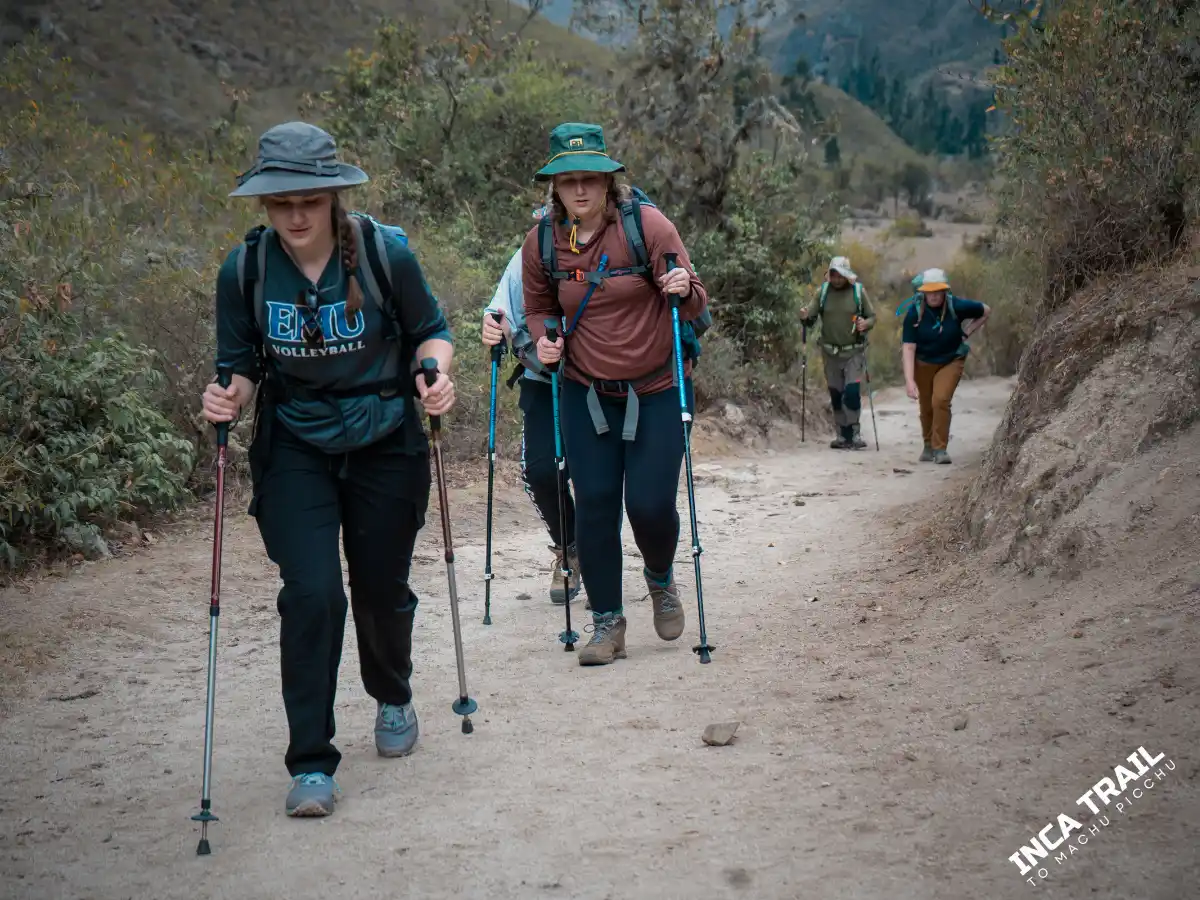
Hikers on the Inca Trail reflect the steady effort and mountain rhythm that define the route’s difficulty.
What is the best time to do the Inca Trail 5 Days?
The dry season, usually from May to September, is often the best period for the Inca Trail 5 Days. Trail conditions are usually firmer, visibility is better, and rain is less likely to disrupt the experience.
That said, the weather can still shift quickly because the route moves through different altitudes and ecological zones. Also, the Inca Trail is closed every February for maintenance. If you want the month by month breakdown, read Best Time to Hike Inca Trail.
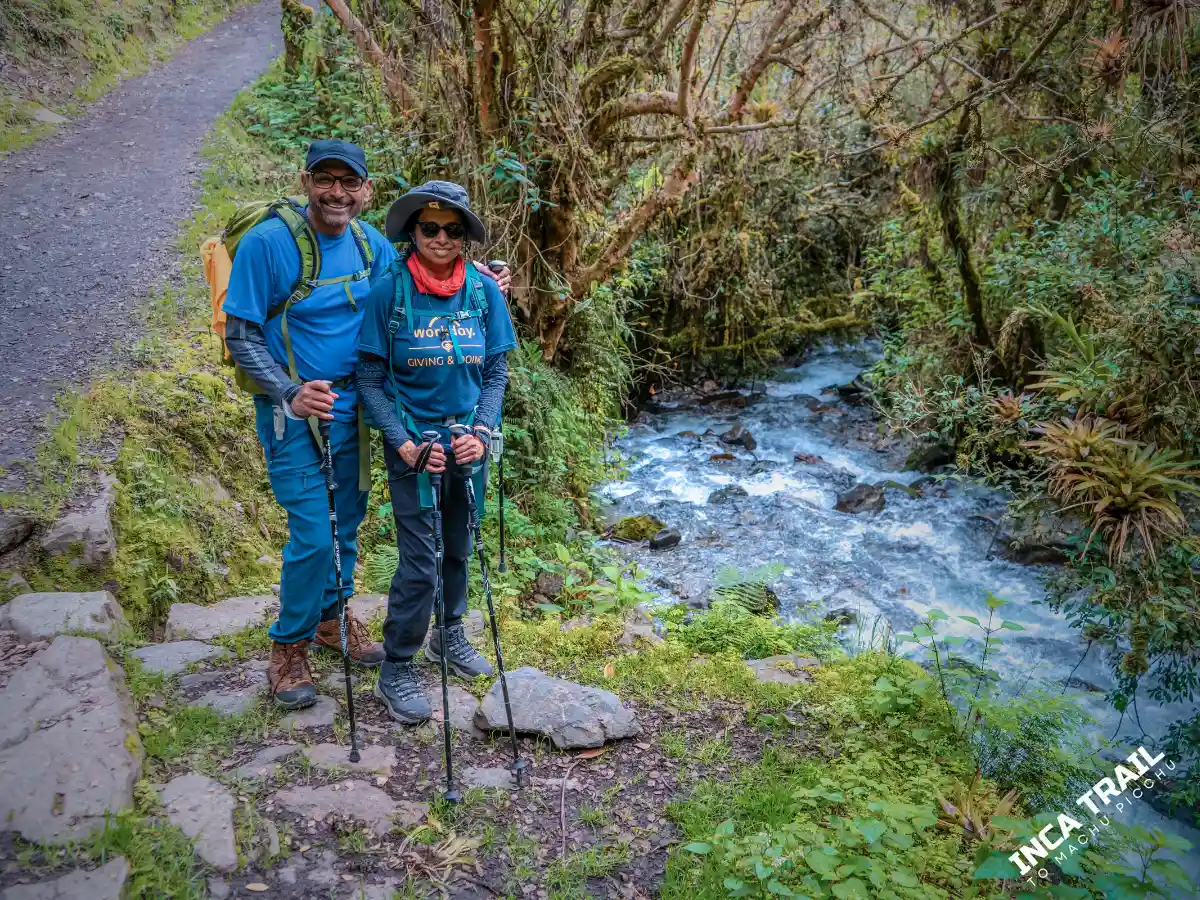
A couple walking the Inca Trail in dry conditions reflects why the best season feels clearer and more comfortable on the route.
How many hours do you walk each day?
On the Inca Trail 5 Days, most hiking days usually fall in the range of about 5 to 7 hours, although actual walking time depends on your pace, weather, and how the operator structures the day. The benefit of the 5 day version is not that you avoid hiking. It is that the daily effort is generally spread out more comfortably.
That makes it easier for many travelers to enjoy the route without feeling like every day is a race against the clock.
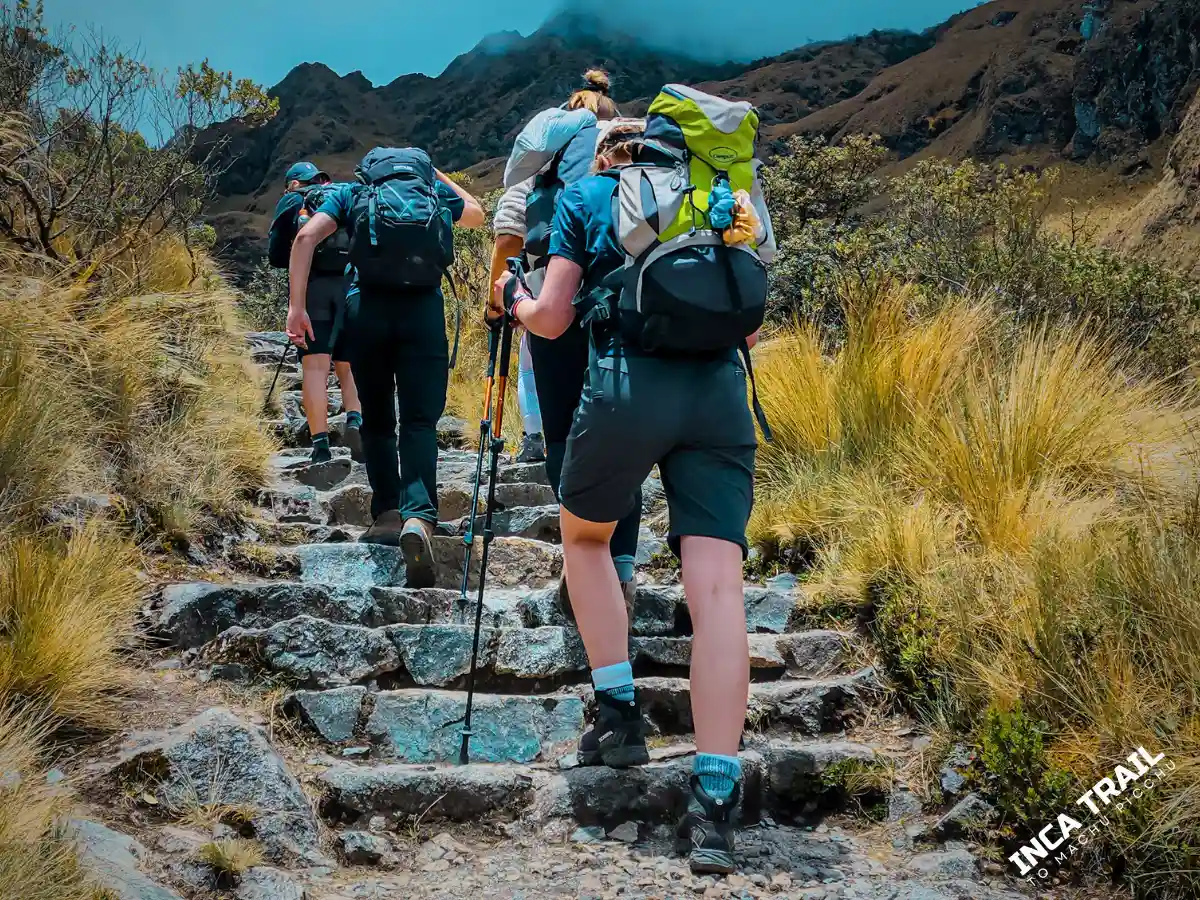
Hikers moving over stone steps on the Inca Trail show the kind of walking time that depends on pace and terrain.
Where do you sleep on the Inca Trail 5 Days?
One of the most useful things to understand about the Inca Trail 5 Days is that it usually combines both camping and hotel comfort. You typically spend 3 nights at designated trail camps and 1 night in Aguas Calientes before the final Machu Picchu visit.
That mix is one reason many travelers like this version. You still get the immersive trail feel, but the hotel night near the end can make the whole experience feel more comfortable and less punishing. For the broader campsite picture, read Inca Trail Camp Sites.

Camping tents on the Inca Trail show where travelers spend the night during the multi day hiking experience.
Do you need permits and a guide for the Inca Trail 5 Days?
Yes. Just like the other official Inca Trail routes, the Inca Trail 5 Days requires permits and must be done through an authorized operator with a guide. You cannot simply arrive and hike it independently.
Booking early matters because permit systems are limited and route access depends on availability. For the full planning picture, read Inca Trail Availability and Permits, and Can You Do the Inca Trail Without a Guide?.

Travelers beside an Inca Trail permit sign show one of the key requirements for entering this regulated route.
What should you bring for the Inca Trail 5 Days?
Packing well matters because this route still includes camping, changing weather, and repeated hiking days. You do not need to turn this article into a full gear checklist, because that subtopic already has its own place in the cluster. What matters here is understanding that smart packing makes the trek feel much smoother, while overpacking or bringing the wrong gear adds unnecessary stress.
| Item | Why it matters |
| Backpack | You need a practical trail setup that respects weight restrictions and keeps essentials accessible |
| Hiking shoes or boots | Uneven stone terrain feels much better with proper traction and support |
| Layered clothing | Temperatures can shift quickly between warm daytime sections and cold nights |
| Rain protection | A waterproof outer layer matters even in drier months |
| Sun protection | Sun exposure at altitude can wear you down quickly |
| Snacks, water, and personal medication | These are part of staying steady, safe, and comfortable on the route |
If you want the complete packing support, read What to Bring on the Inca Trail, Best Inca Trail Shoes, and The Best Backpack for the Inca Trail.
Flora, fauna, and archaeological highlights
The Inca Trail 5 Days is not only about walking. It is also one of the richest versions of the route for travelers who want more time to absorb the ecological and archaeological side of the experience. Instead of going too deep into those subtopics here, it makes more sense to keep the essentials clear and direct you to the specialized articles in the cluster.
| Highlight | Why it matters on the 5 day route | |
| Wayllabamba Trail zone: lower mountain valley |
One of the early camps and a key point in understanding how the trek begins to build gradually toward the harder days. | |
| Dead Woman’s Pass Altitude: 13,828 ft (4,215 m) |
The highest point of the route and one of the defining physical moments of the entire experience. | |
| Phuyupatamarca High camp area: cloud level zone |
One of the signature highlights of the 5 day version, where the slower pace becomes especially rewarding. | |
| Wiñay Wayna Altitude: 8,923 ft (2,720 m) |
One of the most memorable archaeological sites before the final approach to Machu Picchu. | |
| Machu Picchu Altitude: 7,972 ft (2,430 m) |
The final destination and the emotional payoff after several days on the trail. | |
If you want to go deeper into these subtopics, read Inca Trail Sites, and Inca Trail Wildlife.
How much does the Inca Trail 5 Days cost?
Pricing depends on the operator, whether the service is private or shared, the camping setup, guide quality, transport, and the overall service level. In general, the Inca Trail 5 Days costs more than the 4 day route because it adds more time, more logistics, and a slower structure.
Rather than locking in one fixed number that may change, the important point is this: this route is positioned as the more immersive and more comfortable version of the classic trail, which usually means a higher price but also a more relaxed experience. For the broader cost picture, read Inca Trail Price.

Checking Inca Trail 5 day offers online is part of comparing prices before choosing the route that fits your trip.
Enjoy the Inca Trail with More Time
The Inca Trail 5 Days is one of the best options for travelers who want the full Inca Trail experience without forcing the route into a tighter pace. You still get the altitude, the archaeological sites, the camps, and the iconic arrival at Machu Picchu, but with more time to acclimatize, enjoy the scenery, and experience the trail more fully. For the right traveler, that slower rhythm is exactly what makes this version so worthwhile.
If you are ready to take on the route with the right level of support, this is a good time to compare which 5 day service style fits you best. Some travelers look for a more flexible private experience, while others focus on comfort, logistics, and overall value. Either way, choosing a well organized operator can make the difference between simply completing the trek and genuinely enjoying every stage of it.
Ready to compare 5 day Inca Trail options with more confidence?
If this guide helped you understand how the Inca Trail 5 Days works, these are good next steps for comparing routes and services before you book:
