

Which is better, Inca Trail or Huchuy Qosqo?
The better option depends on the kind of trip you want. The Inca Trail is better for travelers who want the classic multi day trek to Machu Picchu with more archaeological sites, a bigger hiking challenge, and the iconic historical route. Huchuy Qosqo is better for travelers who want a shorter, quieter, and easier hike with Sacred Valley views and one lesser known Inca site, usually without the same permit pressure or longer trekking commitment.
Table of Contents
Choosing between the Inca Trail vs Huchuy Qosqo is really a choice between two very different hiking experiences in the Cusco region. One is Peru’s best known classic route to Machu Picchu, with controlled permits, multiple archaeological sites, and a much stronger multi day trekking identity. The other is a shorter and quieter hike in the Sacred Valley that gives you a more local and less crowded look at an overlooked Inca site.
That difference matters a lot. Some travelers want the full iconic challenge and the feeling of reaching Machu Picchu through one of the most famous heritage routes in South America. Others want a shorter hike, fewer people, easier logistics, and a more intimate archaeological experience. If you want the broader route context first, start with The Ultimate Inca Trail Guide. Then use this article as your practical guide to Inca Trail vs Huchuy Qosqo.
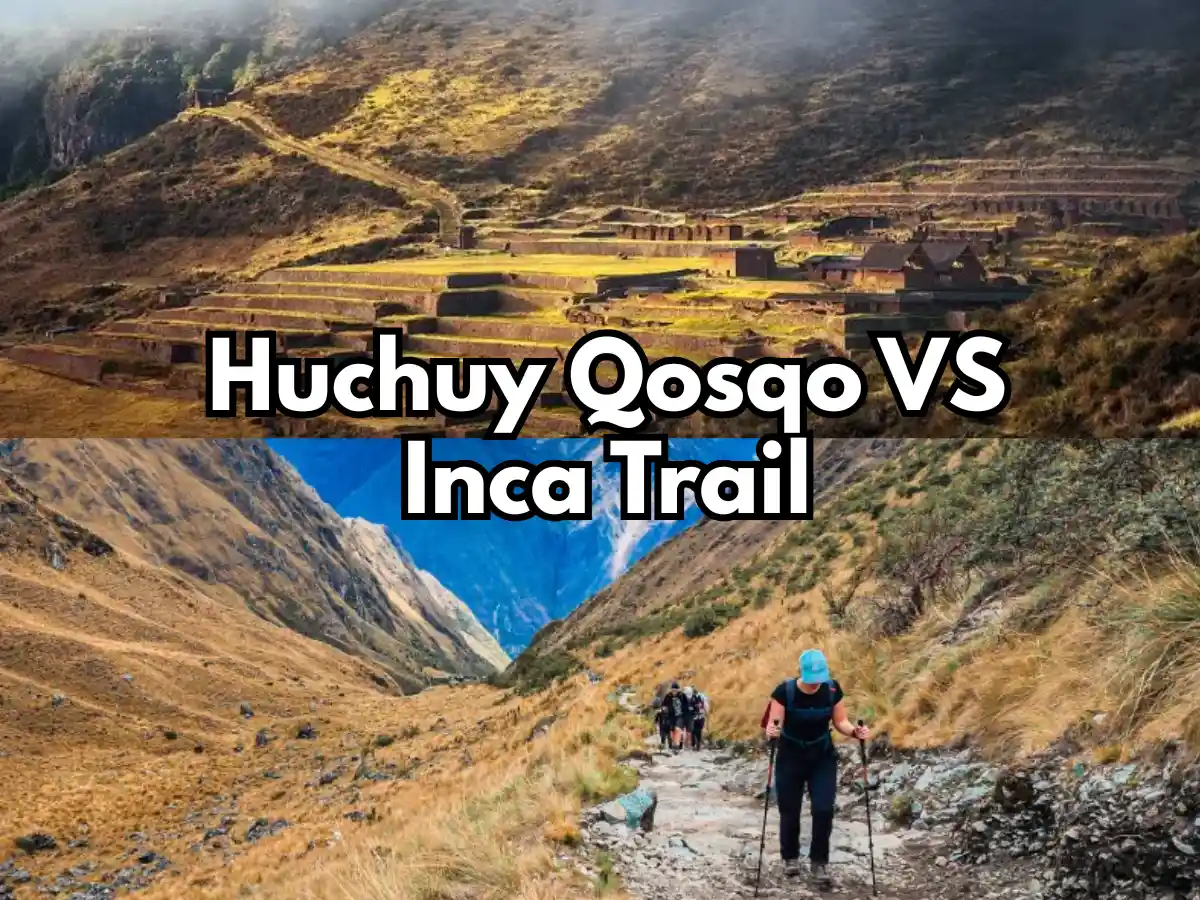
This Huchuy Qosqo vs Inca Trail cover sets up a choice between two routes that feel very different in the Andes.
Inca Trail vs Huchuy Qosqo at a glance
| Factor | Inca Trail | Huchuy Qosqo |
| Main appeal | Classic multi day trek with Machu Picchu and strong archaeological depth | Shorter Sacred Valley hike with quieter trails and one lesser known Inca site |
| Typical duration | Usually 2, 4, or 5 days depending on route version | Usually 1 or 2 days |
| Difficulty | Moderate to challenging | Usually moderate |
| Archaeology | Multiple sites along the route plus Machu Picchu | Mainly Huchuy Qosqo itself |
| Permit pressure | High on the Classic route | Much more flexible |
| Best for | Travelers who want the iconic route and a stronger trekking challenge | Travelers who want less time commitment and fewer crowds |
What is the main difference between the Inca Trail and Huchuy Qosqo
The main difference is simple. The Inca Trail is a full trekking route to Machu Picchu, known for original Inca paths, multiple archaeological sites, and a much stronger hiking commitment. Huchuy Qosqo is a shorter and more flexible hike focused on reaching one lesser visited Inca site above the Sacred Valley.
If your ideal trip is about history, longer trekking days, exclusive trail access, and the classic Machu Picchu route, the Inca Trail is usually the stronger fit. If your ideal trip is shorter, quieter, and easier to organize, Huchuy Qosqo usually makes more sense.
Which route is better for different travelers
| If this sounds like you | Better fit |
| You want the most iconic hike to Machu Picchu | Inca Trail |
| You have limited time in Cusco | Huchuy Qosqo |
| You care most about archaeological sites along the route | Inca Trail |
| You want fewer crowds and easier logistics | Huchuy Qosqo |
| You want a bigger trekking challenge | Inca Trail |
| You want a shorter and more flexible hike | Huchuy Qosqo |
What is the Inca Trail
The Inca Trail is Peru’s best known classic trekking route to Machu Picchu. The version most travelers compare is usually the Classic 4 day route, which covers about 26.7 miles (43 km) and takes hikers through mountain passes, cloud forest, and major archaeological sites before the final arrival toward Machu Picchu.
What makes it special is not only the scenery. It is the combination of original Inca path, archaeological depth, and the feeling of following one of the most famous historic trekking routes in South America. It is also one of the most regulated trekking routes in Peru, which is why it helps to review Classic Inca Trail 4 Days, Inca Trail Difficulty, and Inca Trail Permits if you are leaning toward this option.

Archaeological sites and route scenes you can expect along the Short Inca Trail to Machu Picchu.
What is Huchuy Qosqo
Huchuy Qosqo, often translated as “Little Cusco,” is an Inca archaeological site high above the Sacred Valley. The trek to reach it is much less known than the Inca Trail, but that is also part of its appeal. Instead of a famous permit controlled route with long trekking days, Huchuy Qosqo offers a shorter and quieter hiking experience with panoramic views and a more intimate archaeological stop.
This route is especially attractive to travelers who want to see an Inca site without committing to a multi day trek like the Inca Trail. It is also a better fit for people with limited time or those who prefer a lighter hiking experience.

Huchuy Qosqo unfolds across the hillside like one of those Inca sites that feels hidden until you finally see its full scale.
Time and logistics comparison
| Factor | Inca Trail | Huchuy Qosqo |
| Time needed | Usually a bigger commitment, especially on the Classic route | Usually much easier to fit into a shorter itinerary |
| Planning pressure | Higher because of permits and operator rules | Lower and more flexible |
| Trail style | Full trek experience | Short hike with archaeological reward |
| Best if you have little time | Less ideal | More practical |
Which route takes more time
This is one of the clearest differences. Huchuy Qosqo is usually done in 1 or 2 days, which makes it a much easier fit for travelers with less time. The Inca Trail, by contrast, usually means 2, 4, or 5 days, depending on the route version.
If time is one of your biggest decision points, Huchuy Qosqo clearly has the advantage. If you want the fuller trekking experience, the Inca Trail is the stronger option. Travelers comparing time commitment may also want to review 2 Day vs 4 Day Inca Trail.

Sections of the Huchuy Qosqo trail still preserve the feel of old mountain routes shaped by stonework and slope.
Difficulty comparison
| Difficulty factor | Inca Trail | Huchuy Qosqo |
| Overall effort | More demanding | Usually more manageable |
| Altitude exposure | More sustained over several days | Still relevant, but less prolonged |
| Trail commitment | Multi day hiking challenge | Shorter and lighter hiking experience |
| Best for newer hikers | Less forgiving | Usually easier entry point |
Which route is more difficult
For most travelers, the Inca Trail is the more demanding route. It involves longer trekking days, more sustained altitude exposure, and steeper terrain, especially on the Classic route. The physical effort builds over several days, which is what makes it more challenging overall.
Huchuy Qosqo is usually considered a moderate hike. It can still include uphill effort and altitude, but it is shorter and less punishing than the Inca Trail. So if you are comparing trekking difficulty, the Inca Trail is usually the stronger challenge, while Huchuy Qosqo is the more accessible option. If altitude is one of your main concerns, read Inca Trail Altitude and Altitude Sickness on the Inca Trail.

Hikers climbing steep steps on the Inca Trail show the kind of effort that defines the route’s difficulty.
Scenery and archaeology comparison
| Factor | Inca Trail | Huchuy Qosqo |
| Scenery style | More variety through mountains, cloud forest, and ruins | More open Sacred Valley scenery and quieter views |
| Archaeological depth | Much stronger during the route | Mainly concentrated in one site |
| Iconic feel | Much stronger | More intimate and less famous |
| Best if you want fewer people | Less ideal | Better fit |
Which route has better scenery
Both routes are scenic, but they are scenic in different ways. Huchuy Qosqo is especially strong for panoramic Sacred Valley views, a quieter mountain atmosphere, and a more open feeling along the route. The Inca Trail offers more variety, with mountain passes, cloud forest, archaeological sites, and the iconic final approach to Machu Picchu.
If you want a quieter landscape experience with valley views and fewer hikers, Huchuy Qosqo may feel more appealing. If you want a broader range of scenery and a route with stronger historical atmosphere, the Inca Trail usually wins.

Landscapes and wide valley views from Huchuy Qosqo show a quieter mountain perspective near Cusco.
Which route has more archaeology and historical value
This is one of the easiest points in the whole comparison. The Inca Trail has much more archaeological depth during the route itself. Sites like Runkurakay, Sayacmarca, Phuyupatamarca, Wiñay Wayna, and Intipunku are part of what makes the classic route so famous.
Huchuy Qosqo is still valuable historically, but the archaeology is concentrated mainly in one site rather than spread through the whole route. That gives it a quieter and more intimate feel, but not the same archaeological sequence as the Inca Trail. If this part matters a lot to you, it also helps to read Inca Trail Sites.

The stonework of Wiñay Wayna feels even more striking when it rises so naturally from the mountain itself.
Planning and cost comparison
| Factor | Inca Trail | Huchuy Qosqo |
| Permits | Restricted on the Classic route | More flexible |
| Booking pressure | Higher | Lower |
| Cost | Usually more expensive | Usually more budget friendly |
| Ease of organizing | More restrictive | Much easier overall |
Which route feels less crowded
Huchuy Qosqo is much less traveled. That makes it ideal for travelers who want a more solitary experience, a calmer trail rhythm, and a closer connection to the landscape without the same amount of tourist traffic.
The Inca Trail, by contrast, is one of Peru’s most famous trekking routes and gets much busier, especially in the dry season from May to September. If avoiding crowds matters a lot, Huchuy Qosqo is clearly the better fit.

Ayapata campsite shows one of the overnight stops many hikers use before the hardest climbs of the route.
Which route is easier to organize
Huchuy Qosqo is usually easier to organize. It does not depend on the same restricted permit system as the Classic Inca Trail, and in many cases it can be done with more flexibility. Some travelers even choose to do it without a full guided tour, although a guide can still add a lot of historical value.
The Inca Trail is much stricter. The classic route requires a permit, must be done with an authorized operator, and often needs advance booking. That difference alone is enough to make Huchuy Qosqo the easier option for travelers who want less pressure in the planning stage.
Which route is more expensive
The Inca Trail is usually more expensive because of its permit system, regulated logistics, support staff, and higher demand. Huchuy Qosqo is usually the more budget friendly option, especially since it does not require the same kind of controlled route access.
If you are trying to keep costs lower and want more flexibility, Huchuy Qosqo usually makes more sense. If you are willing to pay more for the classic route experience, the Inca Trail is the stronger investment. If price is a big part of your decision, it also helps to review Inca Trail Price.
How does weather affect each route
Both routes are usually better in the dry season, especially from May to September, but weather affects them in different ways. On the Inca Trail, rain makes steep and uneven trail sections much more slippery and can reduce visibility on mountain and archaeological sections. On Huchuy Qosqo, rain still affects comfort and trail conditions, but the route is shorter and often easier to manage overall.
If seasonality matters a lot to your planning, it helps to review Best Time to Hike Inca Trail before choosing.
Which route is better for your travel style
This is the part that matters most.
- Choose the Inca Trail if you want the iconic Machu Picchu trek, more archaeological sites, and a stronger multi day hiking experience
- Choose Huchuy Qosqo if you want a shorter route, fewer crowds, easier logistics, and a quieter archaeological visit
- Choose the Inca Trail if the route itself matters as much as the destination
- Choose Huchuy Qosqo if you want something lighter, more flexible, and more intimate
Choose Between the Inca Trail vs Huchuy Qosqo
The best answer to Inca Trail vs Huchuy Qosqo is not that one is universally better. It is that they serve very different kinds of travelers. The Inca Trail is the stronger choice for people who want the classic Machu Picchu trek with more history, more sites, and a bigger physical challenge. Huchuy Qosqo is the stronger choice for people who want a shorter and quieter route with less booking pressure and a more intimate Sacred Valley experience.
If you are ready to turn that comparison into a real booking decision, this is the right time to choose an operator you can trust from start to finish. Good agencies do more than organize permits, transport, or guiding. They also help match the route to your travel style, explain what is actually included, and make the whole experience feel safer and more rewarding. You can explore Inkayni Peru Tours or Waman Adventures and compare the route style that best fits your pace, comfort level, and trip goals.
Ready to compare your Sacred Valley or Machu Picchu route with more confidence?
If this guide helped you understand the difference between the Inca Trail and Huchuy Qosqo, these are good next steps for comparing routes and planning better:
- Inkayni Peru Tours Short 2 Day and Classic 4 Day
- Waman Adventures Short 2 Day and Classic 4 Day
