

What is Patallacta on the Inca Trail?
Patallacta, also known as Llactapata, is one of the first major archaeological sites hikers see on the Classic Inca Trail. It is best known for its agricultural terraces, stone enclosures, and strategic location near the early part of the route. More than just an impressive ruin, Patallacta helps explain how the Incas used the trail for farming, control, storage, and movement toward Machu Picchu.
Table of Contents
Patallacta on the Inca Trail is one of the earliest archaeological highlights on the Inca Trail, and that gives it a special role on the route. Before the higher passes, before the cloud forest ruins, and before the final approach to Machu Picchu, Patallacta introduces hikers to the archaeological side of the trek in a way that feels immediate and easy to understand.
That is part of what makes it so important. Patallacta is not only a scenic stop with terraces and ruins. It also helps travelers see the Inca Trail as a real working system, not just a path to Machu Picchu. If you want the broader route context first, start with The Ultimate Inca Trail Guide. Then use this article as your focused guide to Patallacta.

Patallacta spreads quietly across the valley, but its terraces still make a strong first impression from the trail.
Patallacta at a glance
| Key point | Main detail |
| Alternative name | Llactapata |
| Site type | Inca archaeological complex with terraces, enclosures, plazas, and water channels |
| Location | Early on the Classic Inca Trail near Km 82 |
| Approximate altitude | About 8,136 ft (2,840 m) |
| Typical route moment | Usually seen on Day 1 of the Classic Inca Trail |
| Why it matters | It helps explain the agricultural, administrative, and strategic side of the Inca route |
What is Patallacta
Patallacta, often also called Llactapata, is an important Inca archaeological site in the early section of the Inca Trail to Machu Picchu. It is one of the first major ruins that trekkers encounter, which is why it often shapes a traveler’s first real archaeological impression of the route.
The site is especially known for its terraces, stone structures, and visible relationship with the surrounding landscape. Instead of feeling isolated, Patallacta feels integrated into the mountain environment in a way that immediately shows how the Incas adapted terrain for agriculture, settlement, and route control.
Where is Patallacta located
Patallacta is located near the beginning of the Classic Inca Trail, around 5 kilometers (3.1 miles) from the starting area at Kilometer 82. It sits near the confluence of the Cusichaca and Urubamba rivers, which helps explain why it was such a practical place for agriculture and route support.
Its position also makes it a natural introduction to the wider archaeological sequence of the trail. If you want to understand how Patallacta fits into the larger route, it also helps to read Inca Trail Sites, Runkurakay, and Sayacmarca.
Why Patallacta matters on the Inca Trail
The importance of Patallacta comes from more than its appearance. It likely worked as a religious, agricultural, and administrative center connected to the wider Qhapaq Ñan, the Inca road system. That makes it more than just an attractive ruin on the way to Machu Picchu.
For travelers, Patallacta matters because it gives early proof that the trail was part of a functioning network of food production, movement, and control. It helps shift the trek from a simple hike into something that feels more historically alive.

The view of Patallacta from the main trail reveals how closely the route connects movement, landscape, and settlement.
What was Patallacta probably used for
No one can reduce Patallacta to only one function, but most interpretations point toward a site with multiple roles.
| Likely function | Why that interpretation makes sense |
| Agricultural center | Its terraces and terrain adaptation show strong farming use |
| Storage and supply point | Its position would have helped support travelers and local populations |
| Administrative or control center | Its location near the early route suggests oversight and logistical importance |
| Religious or ceremonial space | Some sectors and enclosed spaces point to ritual or symbolic use |
What to see in Patallacta
Patallacta is especially rewarding because it is visually easy to read. Even travelers without a deep archaeological background can quickly notice the logic of the site.
| What to notice | Why it matters |
| Agricultural terraces | They show how the Incas adapted steep terrain for cultivation and supply |
| Stone enclosures | They suggest residential, storage, and administrative uses |
| Water channels | They reflect the hydraulic planning that supported the site |
| Plazas and patios | They help reveal the social and organized layout of the complex |
| The site’s broad scale | It makes Patallacta feel like a real working settlement, not just a symbolic stop |

Stone enclosures at Patallacta show the built side of the site beyond its better known agricultural terraces.
What does the architecture of Patallacta reveal
The architecture of Patallacta shows a practical and highly organized approach to mountain settlement. The structures were built with rustic and shaped stone, joined with mud mortar, while doors and windows followed the familiar trapezoidal Inca form associated with stability and seismic adaptation.
Water channels, niches, open spaces, and terraces all add to that sense of planning. What stands out most is not ornament, but function. Patallacta feels like a site that existed to work efficiently within the mountain environment.
When do hikers usually see Patallacta
Most hikers on the Classic Inca Trail 4 Days see Patallacta on the first day of the trek, fairly early in the route. That timing gives it a special role, because it becomes one of the first real archaeological anchors of the whole experience.
In practical terms, hikers usually reach the Patallacta area after several hours of walking from the starting point, often around the first major stretch of Day 1. If you want the broader route structure, it also helps to read Classic Inca Trail 4 Days.
Can you visit Patallacta without hiking the Inca Trail
If you want to fully explore Patallacta on foot as part of the archaeological route experience, the normal way to do that is through the Classic Inca Trail. Some parts of the site may be glimpsed from the train between Ollantaytambo and Aguas Calientes, but that is not the same as visiting it properly during the trek.
That is one reason Patallacta feels more meaningful than a quick roadside ruin. It belongs to the rhythm of the trail itself.
How difficult is it to reach Patallacta
Patallacta is not one of the hardest parts of the Inca Trail. In fact, compared with the higher pass sections later on, it is one of the more accessible archaeological stops on the route. Still, reaching it means you are already hiking at altitude and beginning a multi day trek, so it should not be treated as effortless.
If physical preparation matters to your planning, it may also help to read How to Train for Inca Trail and What to Bring on the Inca Trail.
When is the best time to visit Patallacta
The best time to visit Patallacta is usually during the dry season, especially from May to October, when trail conditions are more stable and visibility is usually better. During the rainy season, the site can still be impressive, but the trail experience becomes less predictable and more physically demanding.
If season matters a lot to your planning, it also helps to read Best Time to Hike Inca Trail.
Why Patallacta matters more than it first seems
One of the reasons the Inca Trail feels so rich is that it does not wait until Machu Picchu to begin telling its archaeological story. Patallacta is one of the first places where that becomes obvious. It introduces agriculture, planning, route control, and settlement in a way that gives the rest of the trek more context.
That is why Patallacta stays with so many hikers. It may come early, but it already makes the route feel larger, smarter, and more historically alive.
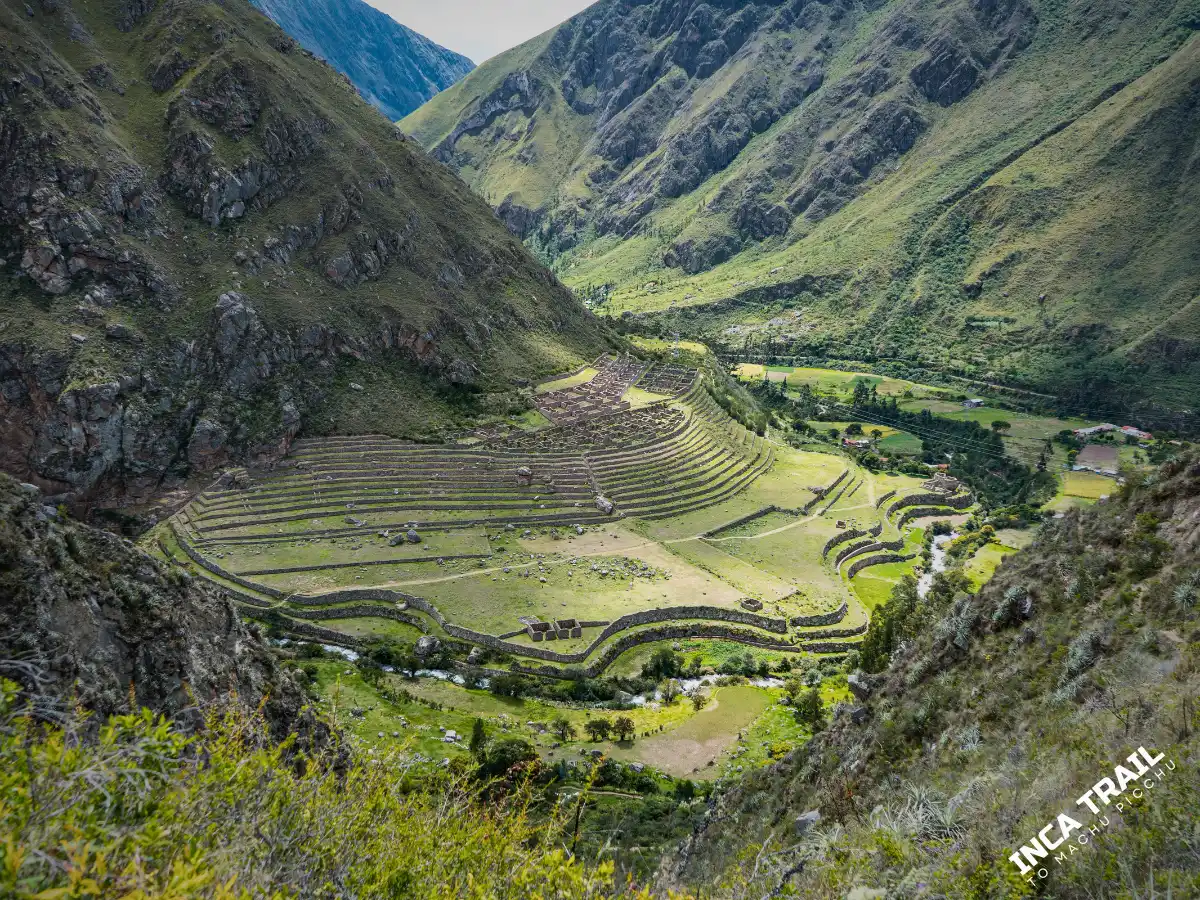
Patallacta opens the journey with terraces, stonework, and the first real sense of the Inca Trail’s scale.
Where the Inca Trail Starts to Feel Archaeological
Patallacta is one of the sites that gives the Inca Trail its early depth. Its terraces, structures, and strategic location show that this route was never only about reaching Machu Picchu. It was also about movement, agriculture, storage, and the everyday functioning of the Inca world. That is what makes Patallacta such an important first archaeological stop on the trail.
If you are ready to experience this part of the route with the right support, this is a good time to choose an operator you can trust from start to finish. Good agencies do more than organize permits and camp logistics. They also help travelers understand why sites like Patallacta matter, pace the route well, and make the whole trek feel more rewarding. You can explore Inkayni Peru Tours or Waman Adventures and choose the option that best fits your pace, comfort level, and travel style.
Ready to understand the archaeological side of the Inca Trail from the very beginning?
If this guide helped you understand why Patallacta matters on the route, these are good next steps for planning better:
- Inkayni Peru Tours Short 2 Day and Classic 4 Day
- Waman Adventures Short 2 Day and Classic 4 Day
